
Last week, the heads of the economic affairs sections (HEAs) of many Dutch embassies and consulates-general came to the Netherlands for International Economy Week (IEW). Read on to find out more about this event and the important work that HEAs do for Dutch businesses that operate internationally – or want to.
A four-day programme had been set up for the HEAs at the IEW. It included meetings with civil servants from other ministries, aimed at strengthening collaboration and exchanging knowledge. They also visited Dutch companies and regional development agencies for inspiration – this year in Leeuwarden (water technology), Rotterdam (defence, maritime manufacturing and port industry) and Utrecht (healthcare and defence industry).
Minister for Foreign Trade and Development aid Aukje de Vries during her speech at the National Export Event (NEX).
Minister for Foreign Trade: ‘Our economic experts are opening up the world even further for Dutch entrepreneurs’
‘We rank 18th amongst the world’s economies,’ the Minister for Foreign Trade and Development, Aukje de Vries, said in a speech at the annual National Export Event (NEX). ‘More than a third of our income is earned abroad. And directly or indirectly, trade provides jobs for a quarter of the Dutch workforce.’
Encouraged by Aukje de Vries, around 250 experienced Dutch exporters at NEX met with the HEAs to tap into their knowledge and expertise. ‘The economic experts at our embassies and consulates know the local markets,’ the minister said. ‘They can open doors with authorities and they have large networks to help you get going. Because that’s what the Ministry of Foreign Affairs is all about: creating opportunities, removing obstacles and opening up the world further for Dutch entrepreneurs. So my message to you is simple: make use of us! Our door is always open.’
The HEAs rounded off the IEW programme with a day at BZ’s headquarters in The Hague. They listened to a speech by Secretary-General Christiaan Rebergen, joined a panel discussion with EU Chief Trade Enforcement Officer Denis Redonnet on economic diplomacy in a turbulent world, and attended various thematic sessions on economically relevant topics, including the defence and semiconductor industries, trade missions abroad, working with AI, and the tools of Invest International, Atradius and the Netherlands Enterprise Agency (RVO).
What does a HEA do?HEAs are in charge of the economic section at the mission (embassy or consulate) where they work. Their work varies somewhat, depending on the country and mission, but in general they lead the team that works to identify and exploit economic opportunities for the Netherlands and Dutch businesses in the country or region in question. |
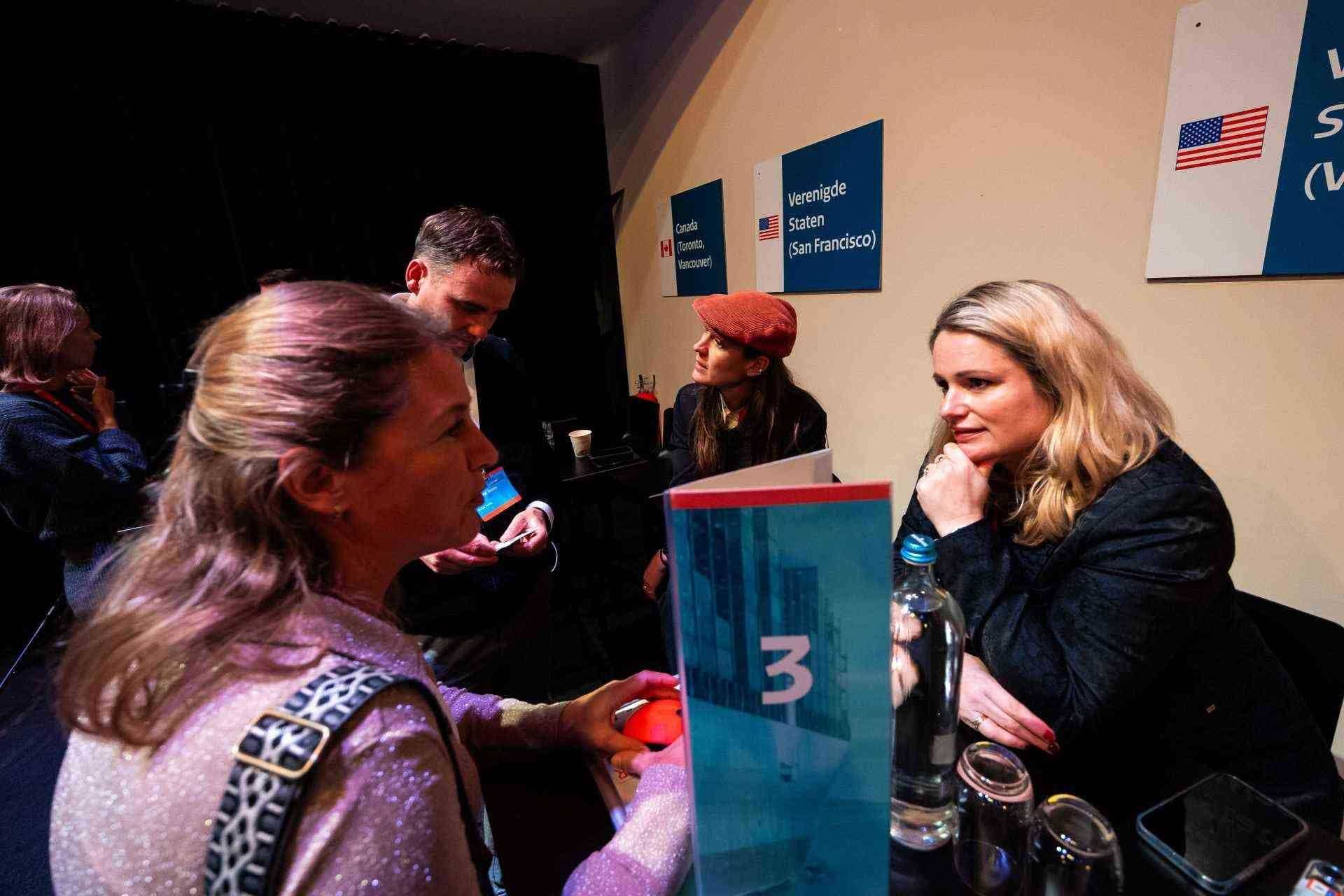
Image: RVO
Head of the economic department at the embassy in Washington DC Danielle van Mulukom talking with a Dutch entrepreneur.
HEA embassy Washington DC
For two months now, Danielle van Mulukom has held the role of HEA at the embassy in Washington, DC. As you might expect, she and her team are occupied with the issue of trade tariffs, but that’s definitely not all. ‘Right now, trade tariffs are the biggest geopolitical issue on our agenda, and they’re getting a lot of attention of course. But as far as the Netherlands is concerned, there is still money to be made in the US, and firms are spotting a lot of opportunities.
‘That’s why we’re working just as hard on active trade promotion: supporting Dutch businesses in the US – or that want to enter the US market. For example, we organise trade missions jointly with the Dutch consulates and the Netherlands Business Support Offices in the US, and of course with the Netherlands Enterprise Agency and the ministries in the Netherlands.
‘We maintain an extensive network of firms in the US, like the Holland on the Hill network here in Washington, DC. We recently had a visit from the Minister for Foreign Trade, Aukje de Vries, who was in the capital to attend the annual meeting of the World Bank. Other activities included a successful sports mission to Los Angeles – which will host the Olympic Games in 2028 – and a visit by a delegation of leading Dutch companies from the cybersecurity sector.’
Danielle and her team won’t be slowing down in the near future. Next year the US will mark the 250th anniversary of its independence. There’s also CES 2026 in Las Vegas in January, and the FIFA World Cup in the summer. ‘These are all great opportunities for us to get involved, and bring in our Dutch contacts and businesses.’
‘Rewarding to champion the Netherlands’
It’s clear that Danielle isn’t short of work in her role as HEA. What is it about the job that she finds so appealing? ‘It just feels hugely rewarding to champion the Netherlands. To do my best on behalf of Dutch businesses – they’re so diverse, innovative and enterprising. We can be proud of them for putting the Netherlands on a unique footing in Europe – in fact, in the world. I’m honoured to do my bit to help them maintain that special position.’
To this end, Danielle doesn’t just work with the colleagues in her team and the embassy, and with Dutch entrepreneurs. ‘No, you need a lot more people for this. It’s a real joint effort involving all the Dutch missions in the US. We reach out to American and Dutch businesses, trade associations, think tanks and of course local and federal authorities. This broad network enables us to identify economic opportunities and determine our priorities in the US. Which sectors offer the Netherlands the opportunity to both contribute and gain, while making our economy stronger and more resilient?’
|
The HEAs and the economic affairs sections in diplomatic missions are also involved in investments by the Dutch executive agencies Invest International, Atradius and the Netherlands Enterprise Agency (RVO). |
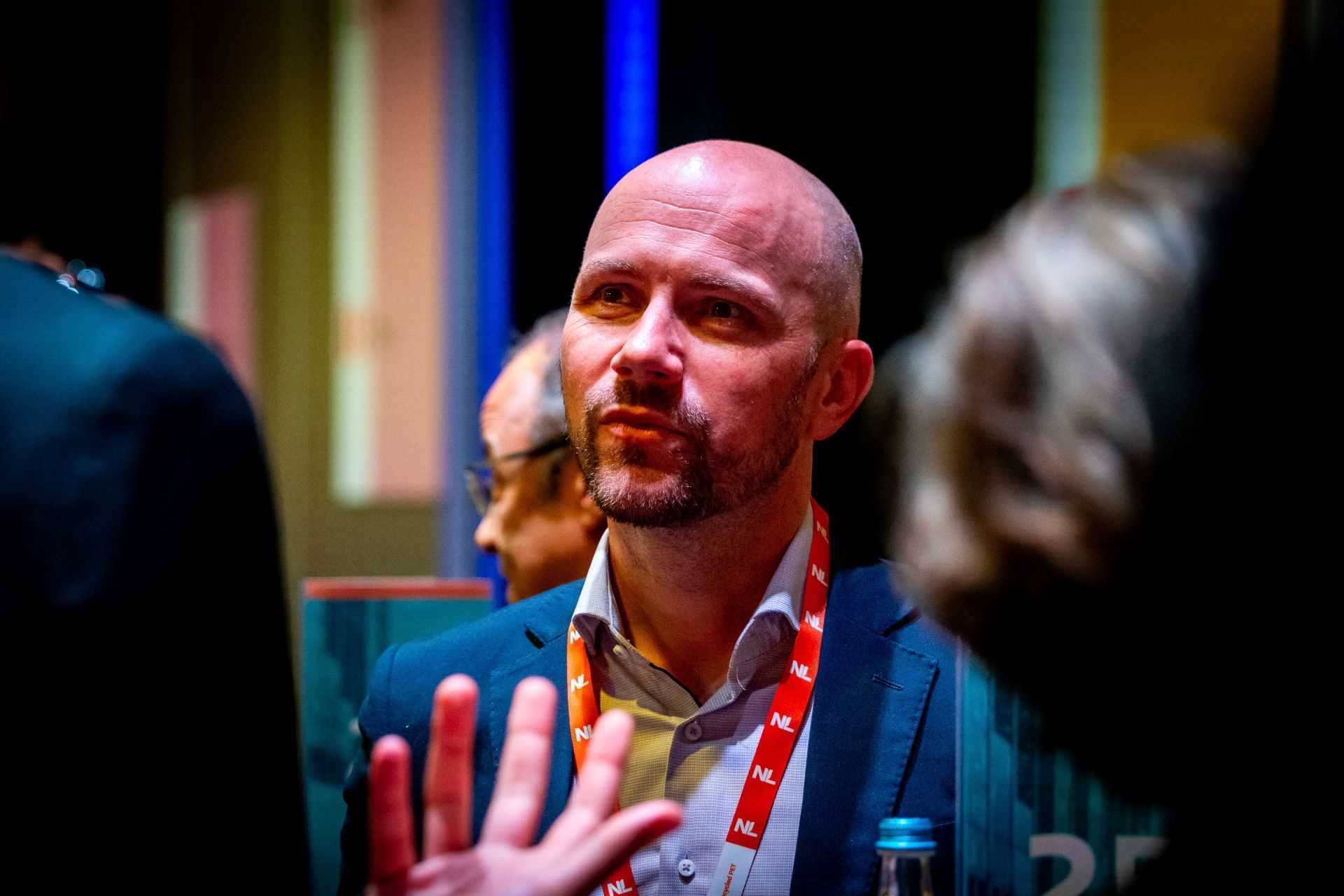
Image: RVO
Head of the economic department at the embassy in Accra, Ghana Rens Twijnstra.
Opportunities in the horticultural sector in Ghana
For three months now, Rens Twijnstra has held the role of HEA in Accra, Ghana. Where does he see the opportunities for Dutch businesses? ‘What’s struck me in these first few months are the opportunities in the horticultural sector. The embassy has a lot of expertise in this area, partly thanks to the hard work done by the attaché seconded from the Ministry of Agriculture, Fisheries, Food Security and Nature. This helped a group of Dutch businesses decide to invest significantly in the horticultural sector, with a focus on the seed sector.’
During the recent trade mission to Ghana, and in the Dutch pavilion at the Agrofood Fair in Accra, Rens noticed that the Ghanaian government was deeply interested in Dutch horticultural products and expertise. At present, Ghana still imports nearly half of its fruit and vegetables, while seeking to be less dependent on imports. ‘There’s a tremendous amount of agricultural land available in this country,’ Rens says. ‘Ghana’s wish to step up domestic production and the wide-ranging expertise possessed by Dutch companies could lead to appealing win-win situations for both sides.’
The embassy in Accra has now set up and funded a pilot scheme enabling Dutch seed companies to set up facilities in Ghana to grow and market seedlings locally. Rens: ‘This also provides an opportunity to explore possible local demand for different varieties of crops like tomatoes, onions and chili peppers. More and more Dutch businesses are setting up operations here. That’s something I can definitely focus on in the near future.’