
Every Finn knows what to do in a crisis like a major power outage or a cyberattack. Resilience and defence will be important issues during the state visit to the Netherlands, taking place on 11 and 12 December. ‘The need to be self-sufficient and resilient is in the Finnish DNA,’ says Simon van der Burg, Dutch ambassador in Helsinki.
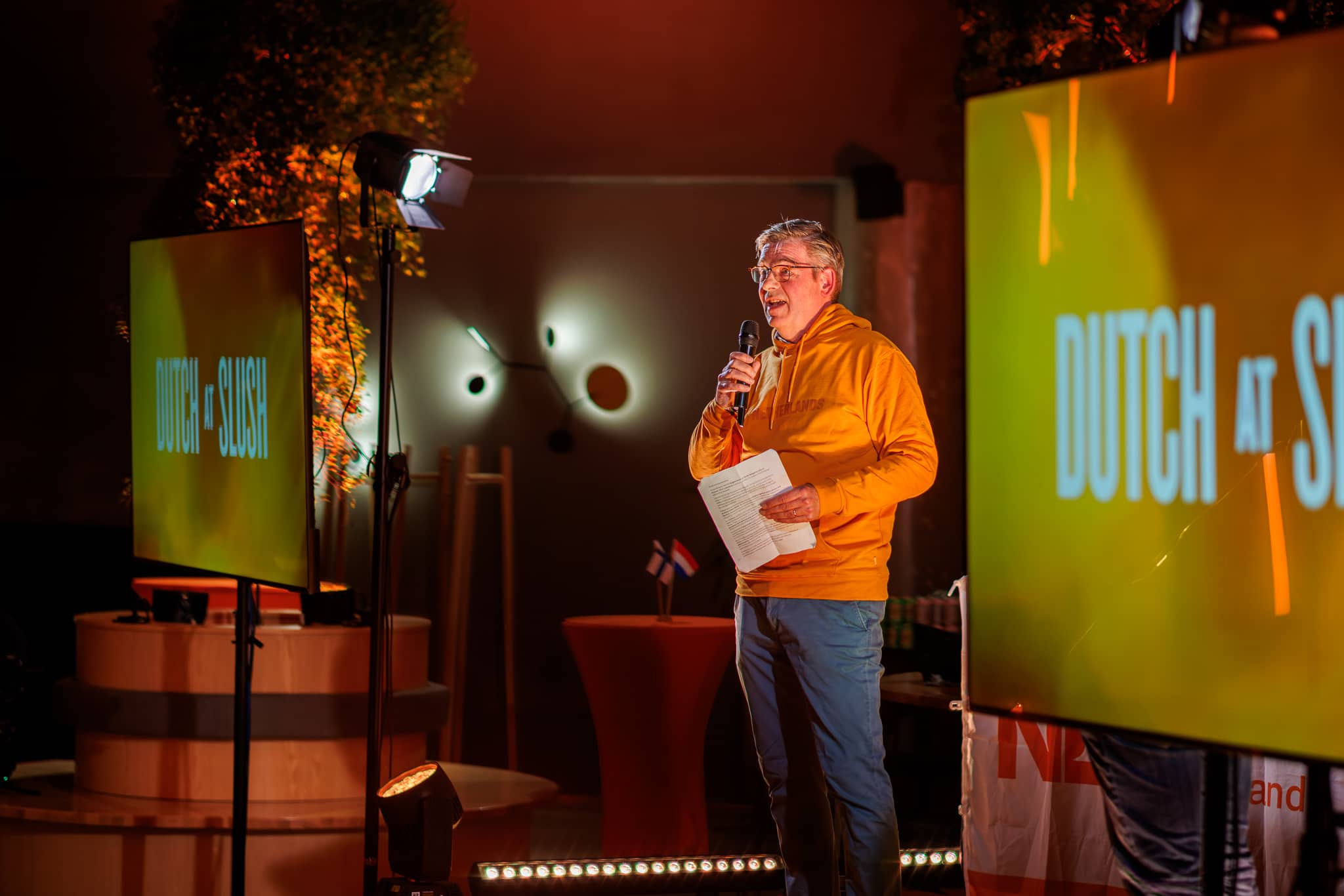
Simon van der Burg, Dutch ambassador to Finland, earlier this year during the opening of start-up event Slush in Helsinki.
Finland has a population of 5.6 million, 900,000 of whom are army reservists. By law, all new buildings larger than 1,200m2 must include a bomb shelter. And there is a special agency to coordinate emergency supplies, such as power, in the event of a crisis. Whether it's a natural disaster, cyberattack or war: the Finns are prepared.
These are examples the Dutch ambassador in Helsinki, Simon van der Burg, cites with admiration. The Netherlands can learn something about resilience from the Finns, he says. It’s no coincidence that resilience and defence are important themes for the state visit of the Finnish president Alexander Stubb and his wife to the Netherlands, which will be take place on 11 and 12 December.
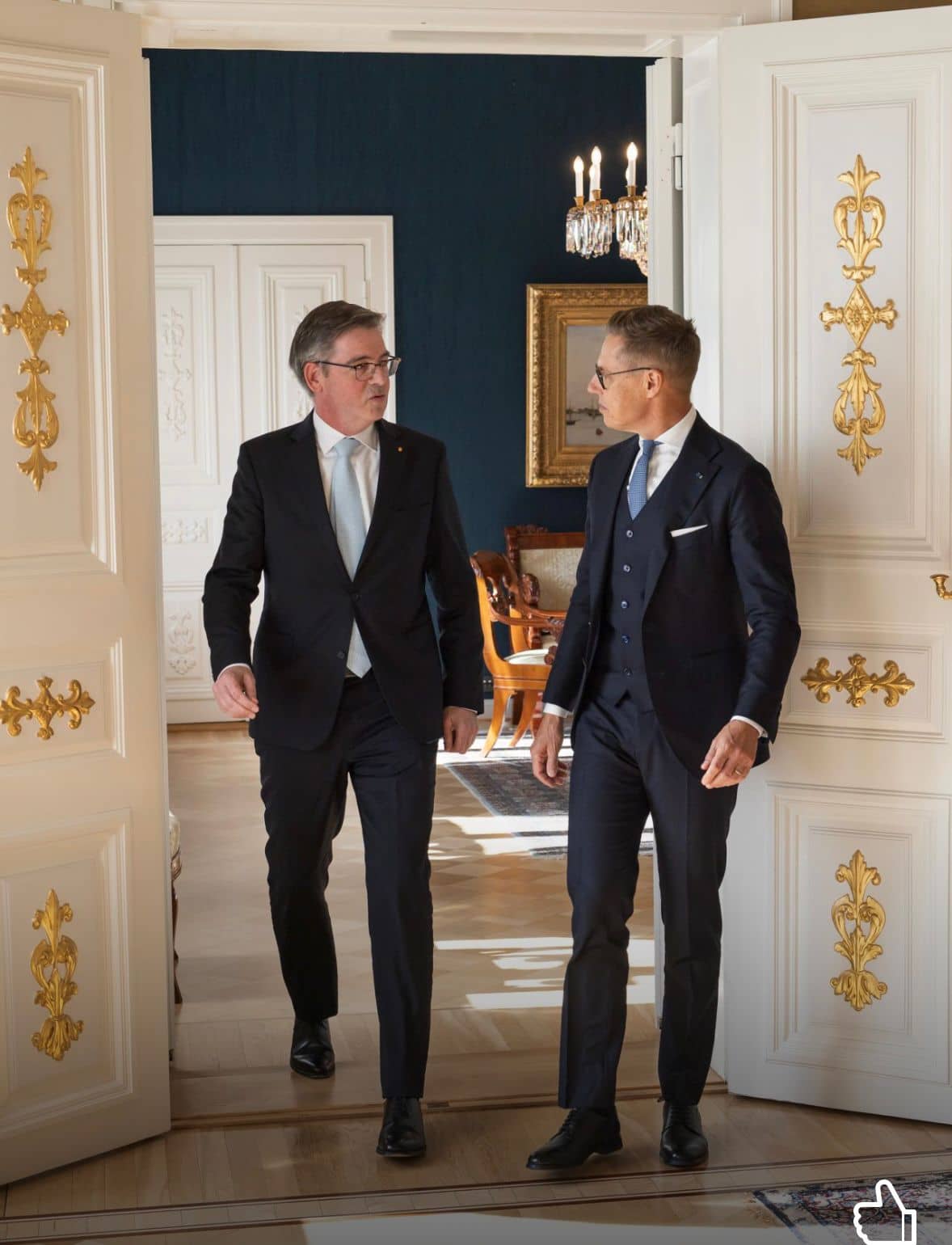
Image: © Matti Porre/Office of the President of the Republic of Finland
Dutch ambassador mr Van den Burg with president Stubb of Finland (right).
Reaffirming Finnish-Dutch relations
Finland and the Netherlands have an excellent relationship. Nonetheless, it has been 35 years since Finland's highest political representative visited the Netherlands.
Even good relations need reaffirming from time to time,’ Van der Burg explains by telephone from Helsinki. ‘The Netherlands and Finland are like-minded countries. We think in the same way about major issues such as security and the European budget. We work together within the European Union (EU), the United Nations (UN) and, since Finland became a member in 2023, NATO. And we’re among the countries providing the most support to Ukraine, proportionally speaking. Support for Ukraine is a top priority for Finland.’
Resilience
Finland’s resilience goes back a long time. In 1939, Russia and Finland engaged in the Winter War. Although Finland ultimately had to relinquish large parts of its territory, it remained an independent country. 'Since that war, Finland has been aware of the need to be resilient,’ Van der Burg explains.
‘It has a 1,340km-long border with Russia. And much of the country is surrounded by water. The combination of water and the Russia as a neighbour means that Finland has never stopped thinking about its own security. The thought has always been: if something happens, we might be on our own.’
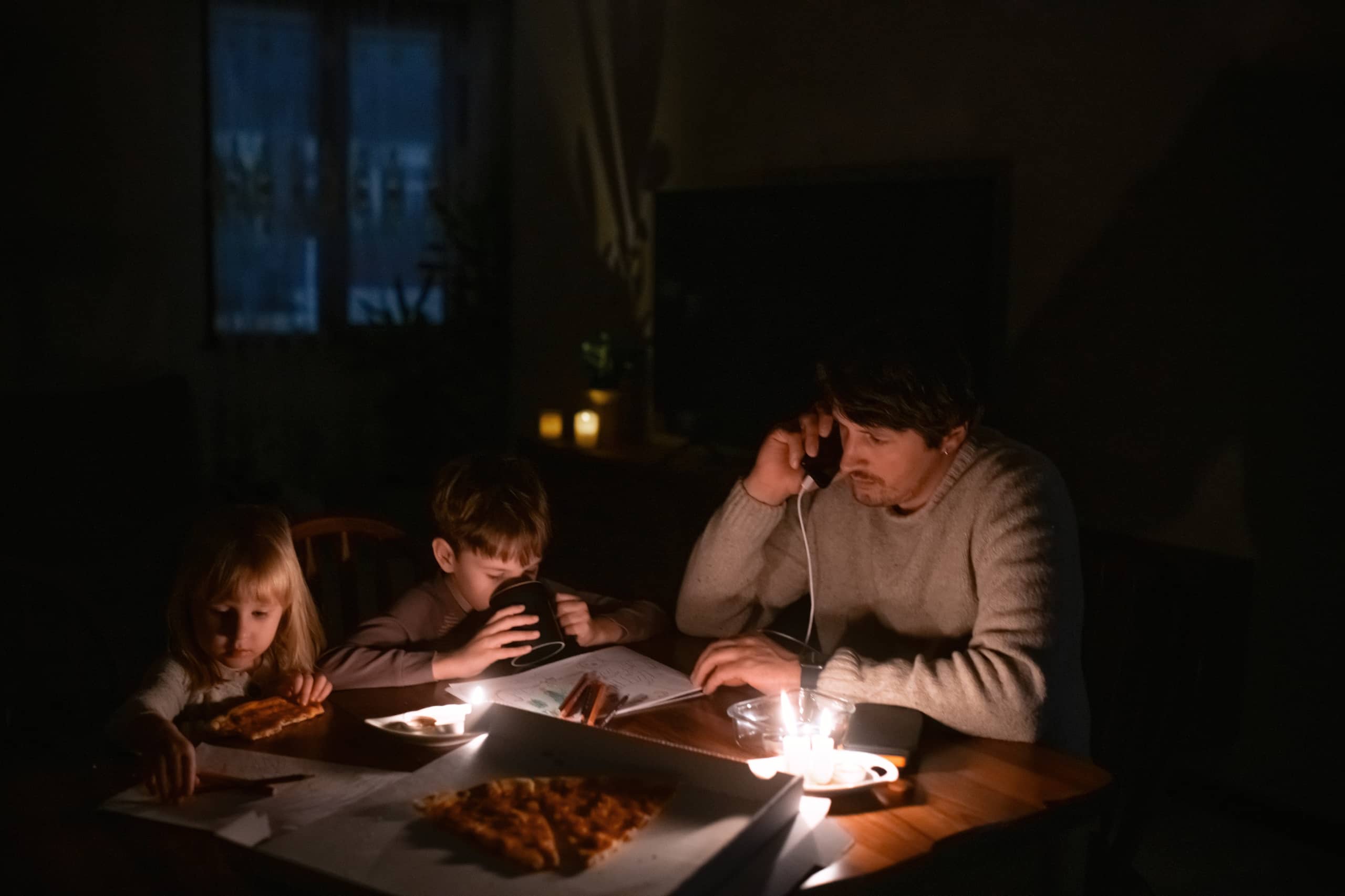
Image: © Getty images
Much of the Finnish people’s resilience is based on believing that the government and fellow citizens will all do their bit.
Emergency supplies
Finland operates a model whereby important services – such as healthcare and power supplies – must remain intact during a crisis. The government and business community work together to ensure this is possible.
‘It's quite far-reaching,’ says Van der Burg. ‘Imagine that a transport company is to supply drivers in the event of a crisis. To transport emergency supplies, for example. These individuals will be added to a list of staff in critical positions, so they cannot be called up as army reservists.’
Self-reliant
In the event of a crisis, Finns are expected to be largely self-reliant. As in the Netherlands, households are expected to be able to manage for 72 hours so that emergency services can focus efforts where they are needed most. Many Finns are used to keeping emergency supplies in the house anyway, because of the harsh winters.
And exercises involving businesses and the government are regularly carried out. ‘Scenarios are discussed and rehearsed. How can we continue to supply power and make payments, and what do we need to stockpile?’ Van der Burg explains.
‘There is a lot of trust in the government and in each other. Much of the Finnish people’s resilience is based on believing that the government and fellow citizens will all do their bit.’ While this model cannot be copied in its entirety in the Netherlands, the ambassador says that ‘there are definitely elements that we could learn from.’
Finland and the Netherlands have a lot in common. Both score highly when it comes to the happiness and well-being of their respective populations and are known for direct communication and punctuality.
Green energy transition
There will be other themes during the state visit, in addition to resilience and defence. The president and his wife will be accompanied by a large-scale economic mission to the Netherlands. ‘Finland is a world leader when it comes to the green energy transition and defence. This presents opportunities for cooperation with Dutch businesses and knowledge institutions.'
'There are currently Partners for International Business programmes (PIBs) for the defence and security sector and for offshore wind power. These are multiannual public-private partnerships, within which we as the government help a group of Dutch businesses to explore and enter the Finnish market. One example of another great partnership is with the Finnish company ICEYE, which I recently visited and which will supply satellites to the Dutch air force.’
Van der Burg noted that there is a great deal of mutual interest: ‘As the Dutch embassy in Finland, we receive all sorts of delegations. From banks and sustainable businesses to educational institutions.’
Happiness
As northern European countries, Finland and the Netherlands have a lot in common. Both score highly when it comes to the happiness and well-being of their respective populations – Finland rates as the happiest country in the world – and are known for direct communication and punctuality. Van der Burg expects that the state visit will strengthen existing good relations and looks forward to an inspirational few days.
For Van der Burg, who has been ambassador to Finland for just three months, the state visit has come at an opportune moment. ‘We’re working closely together, and that will only develop and deepen thanks to the state visit.’ He feels totally at home in the country. ‘The nature is beautiful and I’ve taken up a new hobby – winter swimming. I take a dip a couple of times a week.’