
Today King Willem-Alexander and Queen Máxima are visiting the southern French region of Occitania. This is Europe’s number one region when it comes to aerospace and aviation. It also has an active high-tech sector and is France’s second largest agricultural region. ‘Occitania unites many of the themes also present in the broader partnership between the Netherlands and France. And it offers countless opportunities for growth,’ says Jan Versteeg, the Dutch ambassador in Paris.
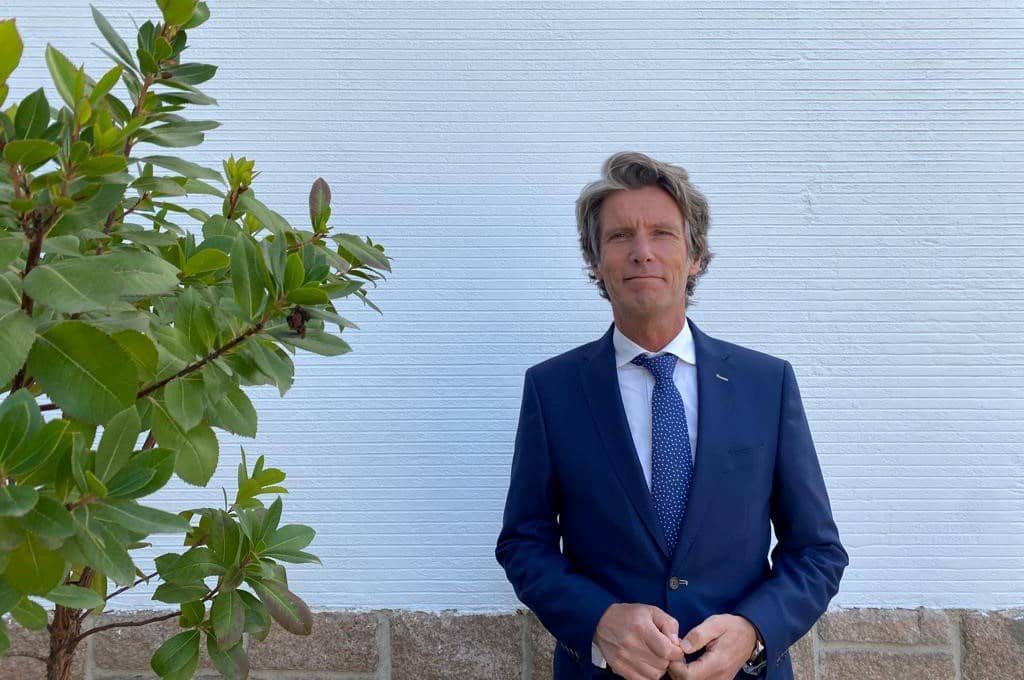
Ambassador Jan Versteeg.
The King and Queen’s working visit to Occitania and its capital, Toulouse, is taking place during the Dutch-French Economic Year, which was initiated during President Macron’s state visit to the Netherlands in 2023. As part of this special year, some 60 events are being organised in both the Netherlands and France to connect businesses, knowledge institutions and local authorities. ‘All year there’s a special focus on economic cooperation between our countries,’ the ambassador explains. ‘We’re showing where we already work together, and where there is scope for new partnerships.’
The royal couple will be visiting the head office of aerospace company Airbus and the Domaine de Candie urban farm which features agricultural robots. An economic mission made up of representatives of some 80 companies, knowledge institutions and local authorities will take place in the margins of the working visit.
What makes the relationship with France so important?
‘The uncertain situation in the world – in terms of politics and economics, but also security – makes it more important than ever to strengthen our relationship with our European partners. France, which is virtually a neighbour, is among the most important of these. The Netherlands works closely with France in all possible contexts – political, economic and cultural, but also internationally within the EU and NATO. Moreover, France is our third largest trading partner. Our bilateral trade is worth around €100 billion. We export a lot more to France than to countries like China or the United States.’
France has 18 different regions. Why Occitania?
‘Occitania unites many of the themes also present in the broader partnership between the Netherlands and France. And it offers countless opportunities for growth. The region is making huge bounds in developing cutting-edge technology, including robotics, satellites and drones for use in agriculture. This enables precision crop management, lowering pesticide use and improving yields.
Toulouse is also the European capital of aviation and aerospace. The city houses the headquarters of Airbus, the French space agency CNES and more than 1,000 businesses associated with the industry. All kinds of companies based in the Netherlands supply parts and materials to Airbus. All this generates hundreds of millions of euros in revenue and thousands of jobs. We want to build on that further in the coming years. The Royal Netherlands Air Force also uses various weapon systems produced by Airbus and recently ordered new helicopters from the company.
Occitania’s location – between the Atlantic Ocean and the Mediterranean Sea – also offers great potential for offshore energy generation. France has long used a lot of nuclear power, but is keen to increase investment in renewable energy, particularly onshore and offshore wind farms. France has already made a great deal of progress in this respect, and Dutch businesses and knowledge institutions can make a valuable contribution in this sector.’
The royal couple during a visit to Airbus. 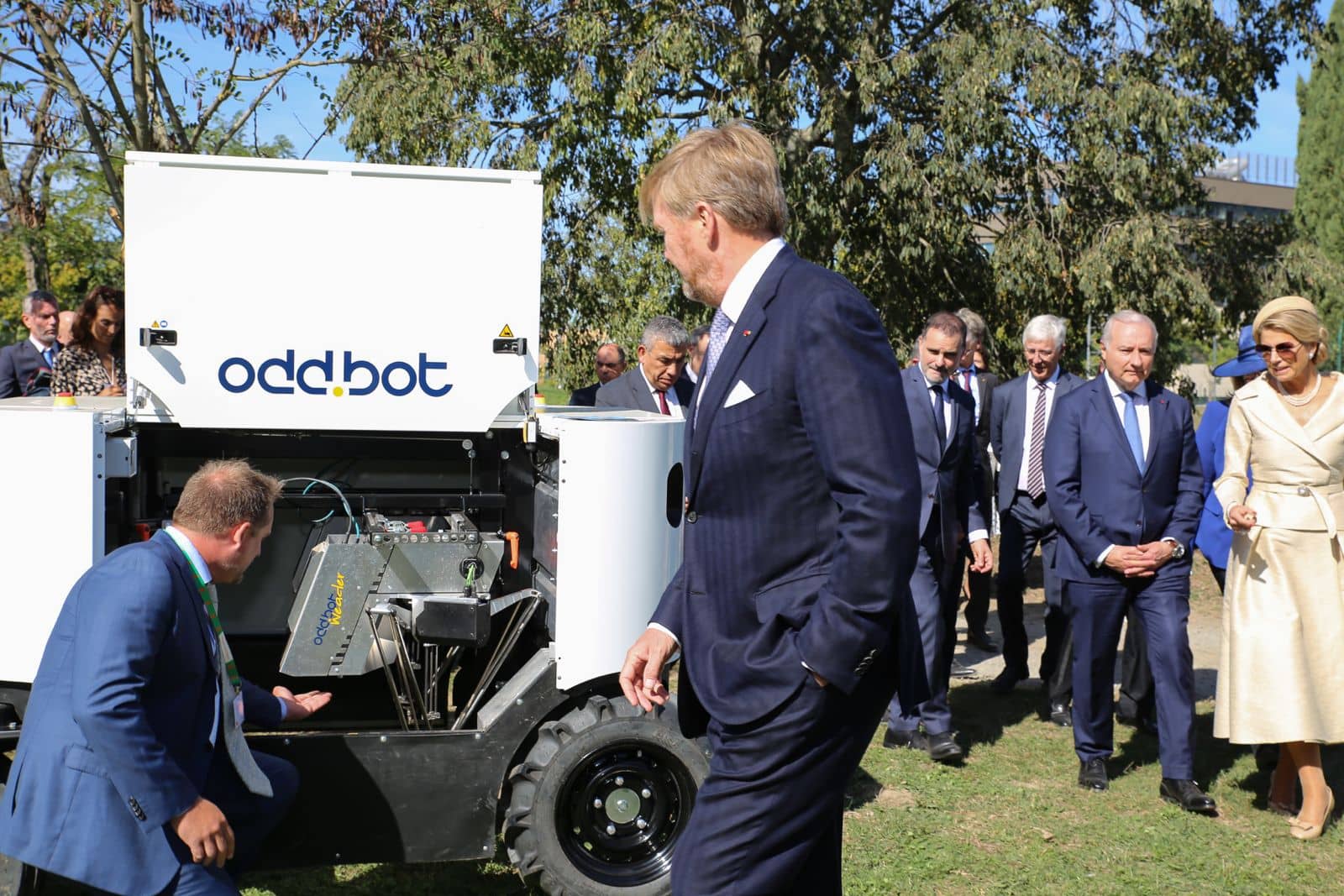
The King and Queen visit urban farm Domaine de Candie.
How did the embassy prepare for this working visit?
‘Over the past months we’ve worked closely with the Royal Household and the Government Information Service to design a programme that gives a good picture of the partnership between the Netherlands and France. One example of this is the King and Queen’s visit to the Airbus headquarters, where they will see an Airbus A350 being built. This quieter model of aircraft will be used by KLM as of 2027. They will also visit an urban farm on the outskirts of Toulouse, which uses robots that incorporate both Dutch and French technology.
Every detail has been carefully planned: from the royal couple’s arrival to transport and company visits. It’s a huge amount of work, but worth it. These kind of visits can give a real boost to the relationship between countries and regions, and between businesses. There’s a reason that more than 100 businesses and knowledge institutions applied to take part in the economic mission.’
The working visit is the first step on the roadmap with Occitania. What is the objective of this step-by-step plan?
‘Occitania is the second region in France with which the Netherlands has drawn up a roadmap, detailing plans for collaboration in various areas over the coming years, ranging from economic cooperation to partnerships on language and culture. The roadmap builds on the Innovation Pact signed during President Macron’s visit to the Netherlands in 2023, in which the countries agreed to deepen cooperation in growth sectors such as energy, sustainable transport, agri-food and technologies including quantum, AI and semiconductors. More than 90 businesses and knowledge institutions are now involved.’
Do you have any tips for businesses and organisations from Occitania seeking to work with Dutch partners?
‘Many partnerships already exist in some areas, but many French businesses still see the Netherlands as a country far to the north. But it’s not all that far, and the cultural differences are not so big. So, my tip is: hop on the train, familiarise yourself with sectors in the Netherlands and go and take a look around.’