
It has been a deadly year for journalism. In conflict zones, more reporters are being killed than ever before. Worldwide, another troubling pattern emerges: in nine out of ten cases where a journalist is murdered, the perpetrator goes unpunished. That must change.
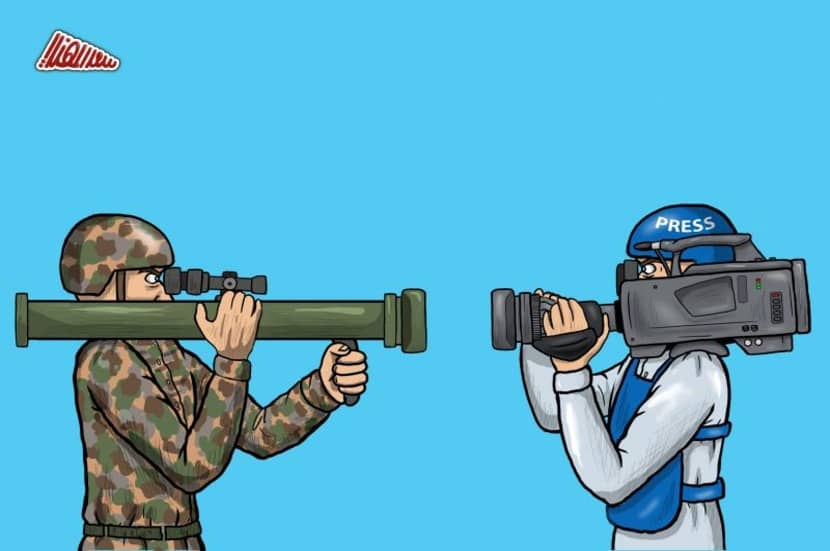
Image: © Cartoon Movement
Those who report the truth are increasingly paying a price for it. Journalists are being threatened, attacked, or obstructed in their work in other ways: cameras are confiscated, press accreditations withdrawn, and access to disaster or war zones denied.
In conflict areas, the choice is sometimes brutally simple: stay silent, flee, or risk never returning home. As a result, more journalists are leaving their countries, while others give up their work for good.
Number of journalists killed in the line of duty
(International Federation of Journalists, Committee to Protect Journalists, April 2026) |
Support for journalists in need
Reliable information is invaluable, especially in times of conflict. It can mean the difference between life and death: where fighting is taking place, which areas are affected, and where food or aid can be found. Even in the Netherlands, we rely on reporters in conflict zones to keep us informed. Without their work, much of what happens would remain unseen.
As long as attacks on journalists go unpunished, the truth itself is under threat. The Netherlands therefore works in various ways to defend and support press freedom.
Dutch Human Rights Ambassador Wim Geerts says it is essential that journalists are able to do their work safely, and that impunity for crimes against them is addressed. Geerts gives an example:
‘Last year, the Netherlands commissioned an independent study to explore ways to strengthen accountability for crimes against journalists. We are now discussing the findings within the Media Freedom Coalition, of which the Netherlands is a member.’
Training
There are also journalists who devote themselves to supporting their colleagues. One of them is Rawan Jayousi, a Jordanian media professional who mentors young reporters working in areas where every story carries a risk. She knows the media world inside out: for years she worked at local radio stations across the Middle East, where she witnessed how fragile independent journalism can be.
Later, she founded Madraj, a programme that helps young media outlets grow. It focuses on entrepreneurship and on finding ways to give journalism in the Middle East a future.
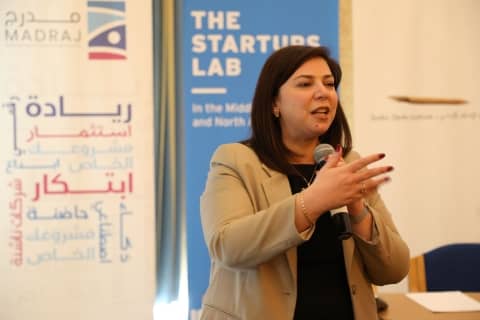
Rawan Jayousi
Rawan also supports journalists working in conflict zones such as Sudan, Yemen and Gaza. Her training sessions are practical and focused on survival in the profession: not on covering the war itself, but on telling the stories behind it. Children without access to education, families without food or water.
She teaches journalists how to film with their phones, verify facts, store data safely, and write about people without putting them at risk. They also learn about solutions journalism: reporting that not only highlights the problems but also shows where people can find help or come up with solutions themselves.
‘Good morning, I am still alive.’
Writing between the bombings
When Rawan was mentoring a journalist in Sudan, she kept the Zoom link open thirteen hours a day. He could join whenever he managed to get a connection. Sometimes messages only came through in the middle of the night. But it was never easy. One of her trainees suddenly disappeared after his house was attacked. ‘I didn’t sleep that night,’ Rawan says. The next day, he sent a message: ‘Good morning, I’m still alive.’
On the West Bank, she mentored four female journalists who could hardly travel. In Gaza, one of her students was constantly on the move. ‘Every week she called me from a different house, whenever she had a signal,’ Rawan says. ‘She was writing stories between the bombings.’
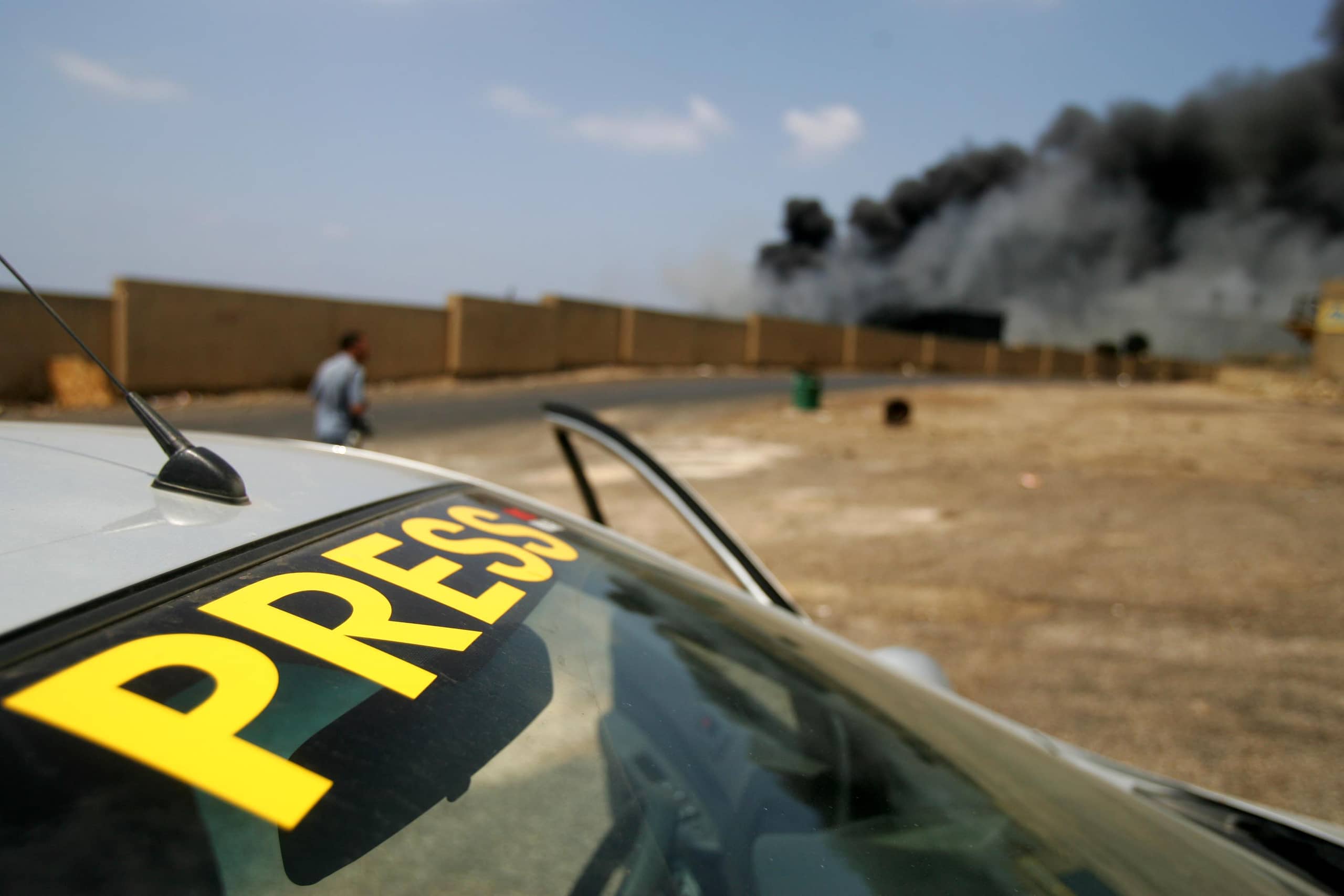
Image: © Alfred Yaghobzadeh
‘They have nothing. How can I tell them to be brave?’
Helplessness
Still, her work has its limits. ‘When someone writes, ‘They’re after me, help me get out,’ you can’t send a plane. When their laptop breaks, you can’t send a new one. And when they have no food, you can’t send money. What can you do then?’
Rawan refuses to push her students into taking dangerous risks. ‘That pep talk: ‘you’re strong, you can do this’ feels dishonest,’ she says. ‘I’m safe, with light, water and food. They have nothing. How can I tell them to be brave?’
She avoids romanticising courage and reminds her students that they can always stop, even when a donor or organisation expects a story. Sometimes, the most meaningful outcome is not an article, but the decision not to publish because doing so would simply be too dangerous.
The price of silence
The International Day to End Impunity for Crimes Against Journalists reminds us that freedom of expression can never be taken for granted. It also reminds us that behind every report and every photograph stands a person who risks their safety to reveal the truth. The Netherlands therefore remains committed to ensuring that violence against journalists does not go unpunished.