
Strategic interests, new shipping routes, raw materials, melting ice caps and fragile ecosystems – developments in the polar regions are accelerating rapidly, and the consequences are being felt around the globe. They impact our security, our economy and the global climate.
This article explores how the Netherlands is working with its partners to safeguard stability and security, establish clear agreements, combat climate change and advance scientific research in both the Arctic region and Antarctica.
What are the polar regions?
The term ‘polar regions’ refers to the northernmost and southernmost areas of our planet. North of the Arctic Circle lies the Arctic, a region known for its reindeer, polar bears and the northern lights. To the far south lies the unique wilderness of the South Pole: Antarctica. These two regions are literally polar opposites: the Arctic is an ocean surrounded by continents, while Antarctica is a continent surrounded by oceans. Some four million people live in the Arctic region, while Antarctica is uninhabited.
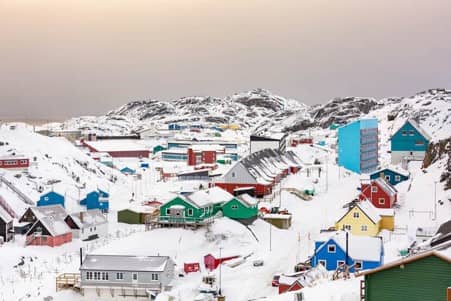
Photo: Filip Gielda. The town of Maniitsoq in Greenland.
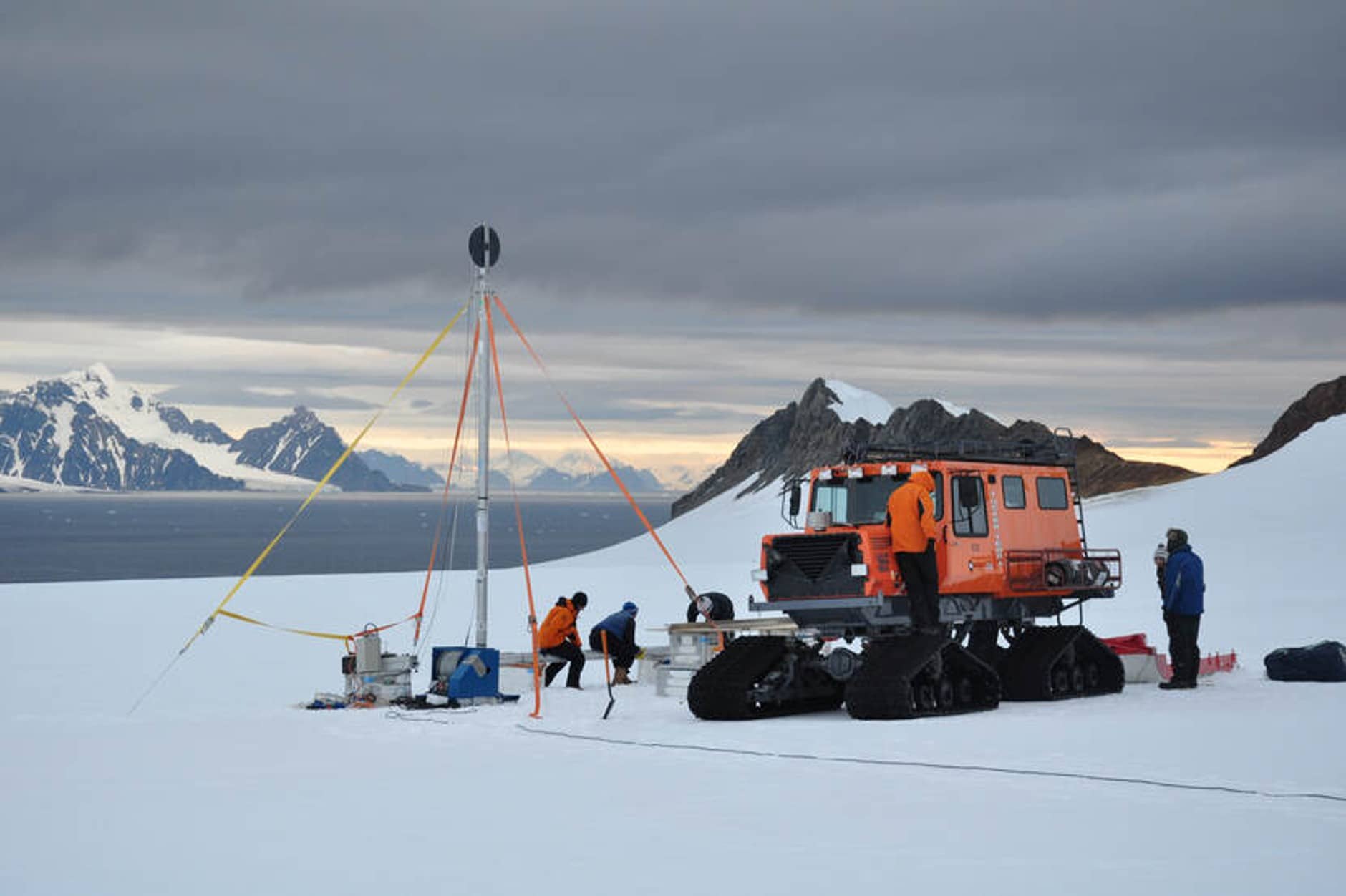
Researchers in Antarctica.
Who do the Arctic and Antarctic belong to?
A large part of the Arctic region falls under the governance of the Arctic states. These are the eight countries with territory above the Arctic Circle: Canada, Denmark (Greenland), Finland, Iceland, Norway, Russia, Sweden and the United States (Alaska). There are also areas beyond national borders that do not fall under the jurisdiction of a single country.
When it comes to Antarctica, there are 29 countries, including the Netherlands, that collectively decide on the governance and future of the continent under the Antarctic Treaty.
Why the polar regions are important to the world
Ice caps melting the Arctic and Antarctica are causing a rise in the sea level and altering ocean currents. In the future, new shipping routes may also expand between Europe and East Asia. The Arctic region is becoming increasingly accessible to fishing boats, cargo and cruise ships and military vessels. In the longer term, it will also become easier to extract raw materials.
The polar regions also play an important role in the global climate. Because of their cold climate, they act as a kind of air conditioning for the planet. But as the Earth warms further, this air conditioning works less effectively. Greenhouse gases like methane will also be released if the frozen ground (permafrost) in the Arctic thaws. Due to these developments, the Arctic warms even faster, creating a negative feedback-loop.
Dutch engagement in the Arctic region: security, stability and cooperation
The Arctic region is becoming increasingly important for our security. For a long time, it was known as an area of peace, cooperation and international agreements. But since the Russian illegal war of aggression in Ukraine, the security situation in the Arctic has also changed. On top of that, now that the region is becoming more accessible and new economic opportunities are emerging, more countries want to exert influence in the area.
The Netherlands is therefore committed to security, stability and international agreements. This involvement takes the following forms.
- Participating in NATO exercises in the Arctic region. This is how we work on collective defence and deterrence, while Dutch military personnel gain experience in the extreme conditions of the polar region.
- Strengthening our cooperation with Arctic allies. For example through the EU and the Joint Expeditionary Force (JEF), a military partnership with European and Arctic allies. The Netherlands is also an observer in the Arctic Council and actively participates in Arctic conferences, such as the annual Arctic Circle Assembly.
- Cooperating for sustainable economic development. We work together with Arctic allies and the EU to contribute to sustainable economic development for the Arctic and its inhabitants. Examples include working together for the sustainable extraction of critical raw minerals, or monitoring the developments regarding Arctic shipping.
- Contributing to high-quality polar research. The Netherlands contributes to knowledge development and scientific cooperation on a wide range of topics, such as glacier melt, avian influenza, or the effects of pollution.
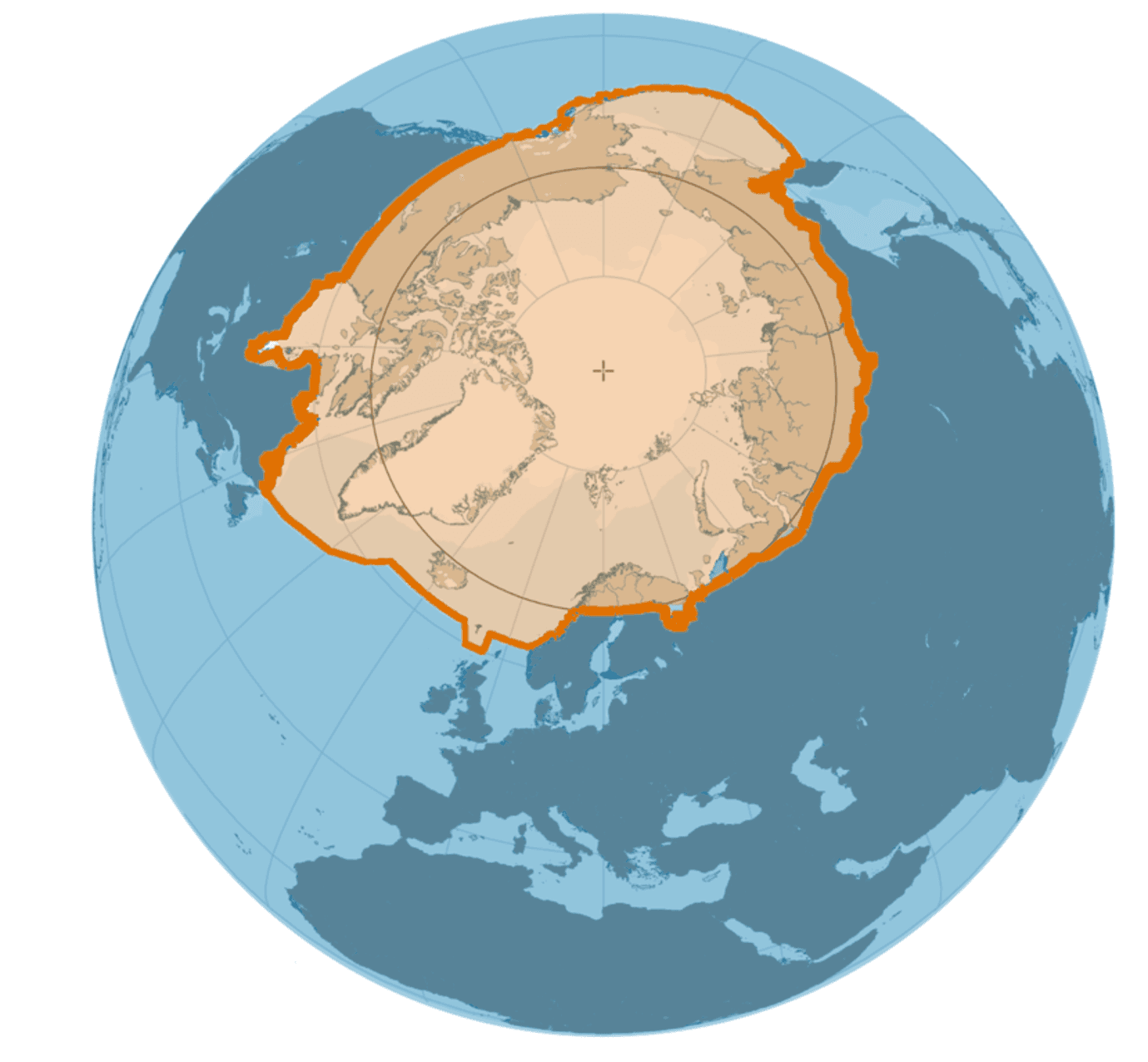
Map of the Arctic region.
Dutch engagement in Antarctica: research and nature conservation
Under the Antarctic Treaty System, the Netherlands is one of the 29 countries allowed to co-decide on the governance and future of the continent, which according to the Treaty shall be used for peaceful purposes only. The treaty stipulates that it is prohibited to extract raw materials in Antarctica and to conduct military activities, such as weapon testing. Agreements have also been made regarding nature conservation and scientific research.
The Netherlands is committed to protecting the unique nature of Antarctica and preventing pollution. We do this, for example, by:
- Setting clear rules for tourism. Together with other countries, the Netherlands is working on a framework which should contain clear agreements regarding the regulation of tourism in Antarctica.
- Designating special protected areas and protected species. The Netherlands aims to provide extra protection to specific areas and animal species, such as the emperor penguin, by granting them a special status.
- Monitoring compliance with the agreements of the Antarctic Treaty alongside like-minded countries. For instance, the Netherlands participates annually in the Antarctic Treaty Consultative Meeting (ATCM). At this meeting, representatives of more than 50 countries gather to discuss the governance of Antarctica, alongside scientists and stakeholder organisations.
- Conducting scientific research in Antarctica. For example, Dutch scientists contribute to research on the role of Antarctica in global climate change and sea-level rise, as well as research into biodiversity and pollution. The Netherlands has its own laboratory in Antarctica, located at the British Rothera Research Station.