
War might seem synonymous with lawlessness: a situation in which anything goes, and there is no limit to human suffering. And yet, we do have clear rules specifically for times of war, designed to prevent the worst excesses of violence and protect civilians, prisoners of war and aid workers. Respect for these rules – known as international humanitarian law – is declining all over the world. The Netherlands is working with international partners to protect this body of law.
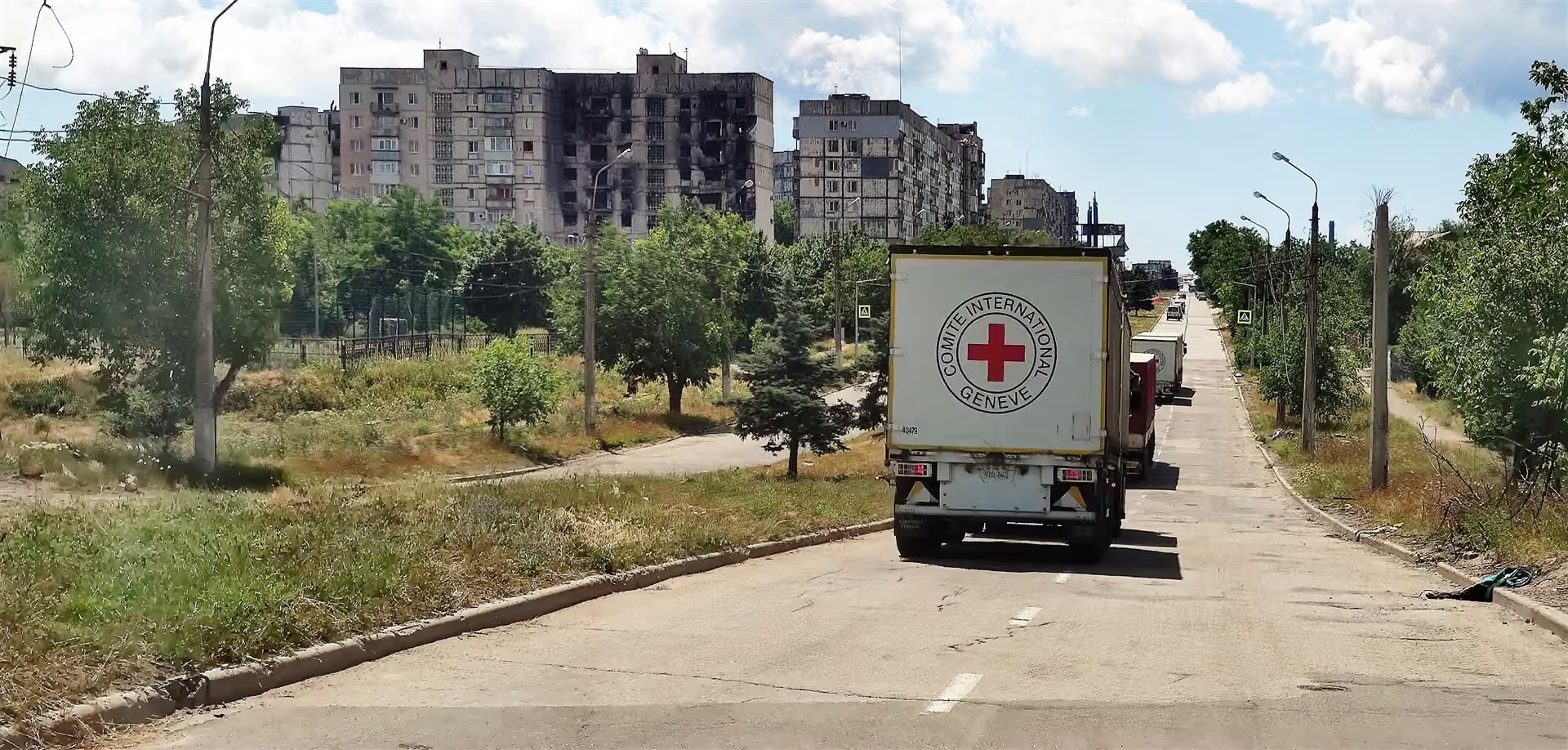
Image: © ICRC
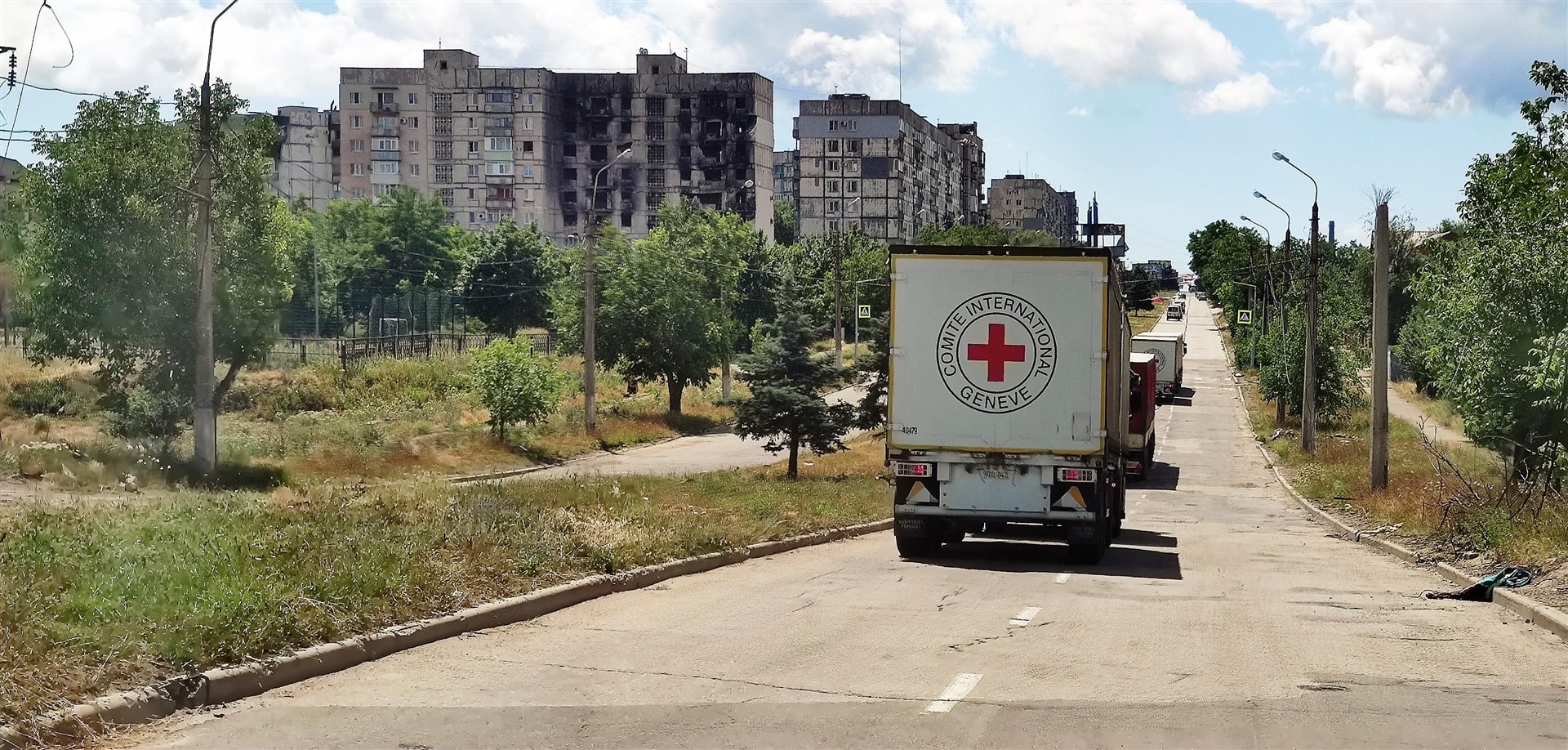
An ICRC convoy carries food parcels, water and hygiene kits for distribution to the population. Mariupol, Ukraine.
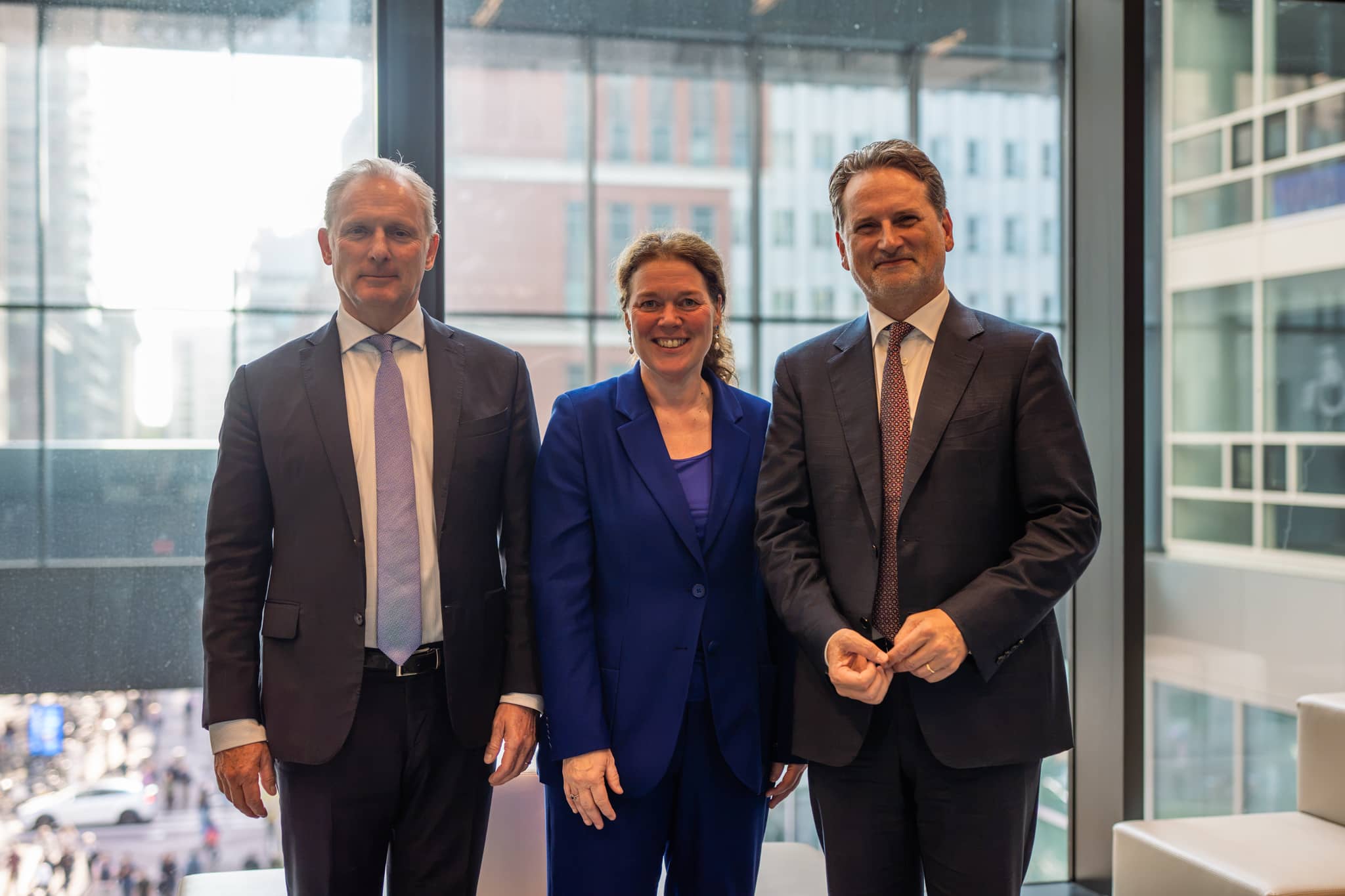
Image: © Ministry of Foreign Affairs
Harm Goossens (left), Pascalle Grotenhuis and Pierre Krähenbühl (right).
‘During the First and Second World Wars, the individuals who conceived modern international humanitarian law saw for themselves how destructive and catastrophic a war without rules can be,’ Krähenbühl explains. ‘The purpose of international humanitarian law is to limit human suffering, precisely because everyone has the potential to do terrible things to others during an armed conflict.’
Protecting aid workers
One way in which international humanitarian law seeks to limit the impact of conflicts worldwide is by ensuring that aid organisations can reach those affected by the violence. But according to Harm Goossens, Secretary-General of the Netherlands Red Cross, the situation is steadily deteriorating.
‘More and more often, we are unable to deliver aid and services to places where the need is greatest,’ he says. ‘Sometimes we have trucks loaded with food, water and sanitation facilities that are kept waiting at closed borders for weeks, or we are hampered by endless bureaucracy.’
What’s more, increasingly aid workers themselves are becoming targets, despite their protected status under international humanitarian law. ‘People want to help, even in extremely dangerous circumstances such as in Lebanon, Sudan and Ukraine,’ says Goossens. ‘But more and more often, identifying yourself as an aid worker by displaying the Red Cross or Red Crescent emblem no longer offers sufficient protection. For example, in Gaza last year, eight Palestine Red Crescent Society medics were killed while carrying out their humanitarian work. They were wearing clearly identifiable emblems and travelling in clearly marked ambulances.’
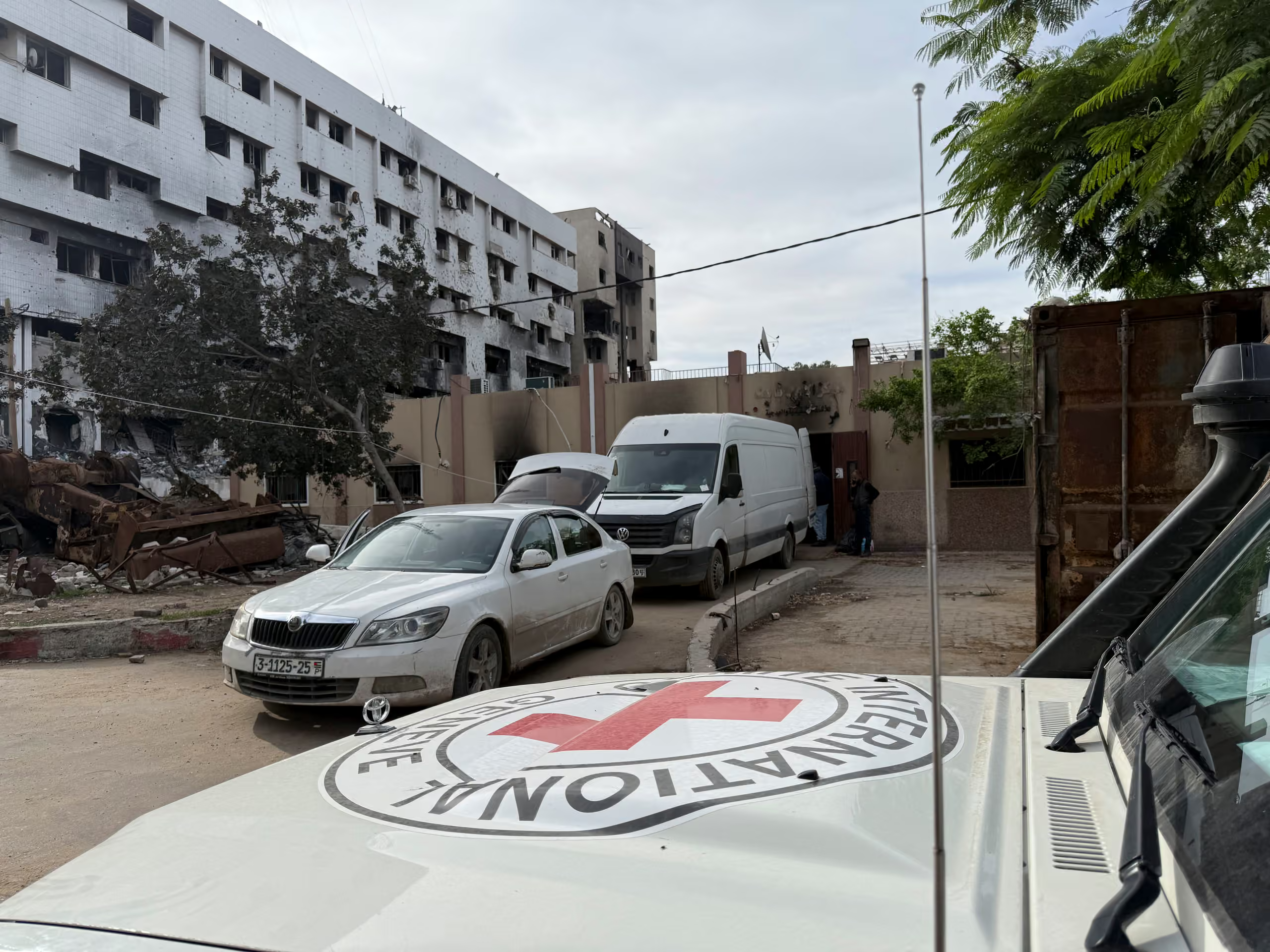
Image: © ICRC
The ICRC works to strengthen the healthcare system with essential material support to Al-Shifa Hospital. Gaza, Al-Shifa Hospital.
The long road to trust
In order to visit prisoners of war, evacuate the wounded or support hostages, the ICRC must be accepted by all parties to a conflict. To this end, the organisation maintains a dialogue with the authorities on each side, in both Kyiv and Moscow, for example, and in both Tel Aviv and Gaza. Without such contact, it’s impossible to gain access to the people who need protection.
The process doesn’t always succeed immediately. Krähenbühl: ‘We often have long periods where we don’t make any progress. The parties to a conflict don’t just willingly or automatically allow a humanitarian organisation into a conflict zone. After all, in a hostile environment like this, outsiders aren’t exactly welcomed in with open arms.’
The ICRC therefore focuses on building trust through dialogue. Krähenbühl: ‘We try to ensure that our words match our deeds as much as possible. That provides a solid basis for trust. But you can lose that trust in a single afternoon if you say or do the wrong thing.’
The Ethiopian region of Tigray is one such place where the ICRC has succeeded, through years of dialogue, in building trust. As ‘Krähenbühl explains, ‘161 people were trapped at the airport in Mek’ele, including police officers, aviation staff and their families. They were in a life-threatening situation. After mediating between the parties, the ICRC was eventually able to bring these civilians to a safer area.’
The mediation effort in Mek’ele was only possible because the ICRC had maintained a presence on the ground for years and as a result had gained the trust of both parties. ‘This took years to achieve. But we know the importance of not giving up. After all, a one-off request will often automatically be met with a ‘no’. You have to slowly build a dialogue. Ultimately, it is the responsibility of parties to the conflict to comply with international humanitarian law.’
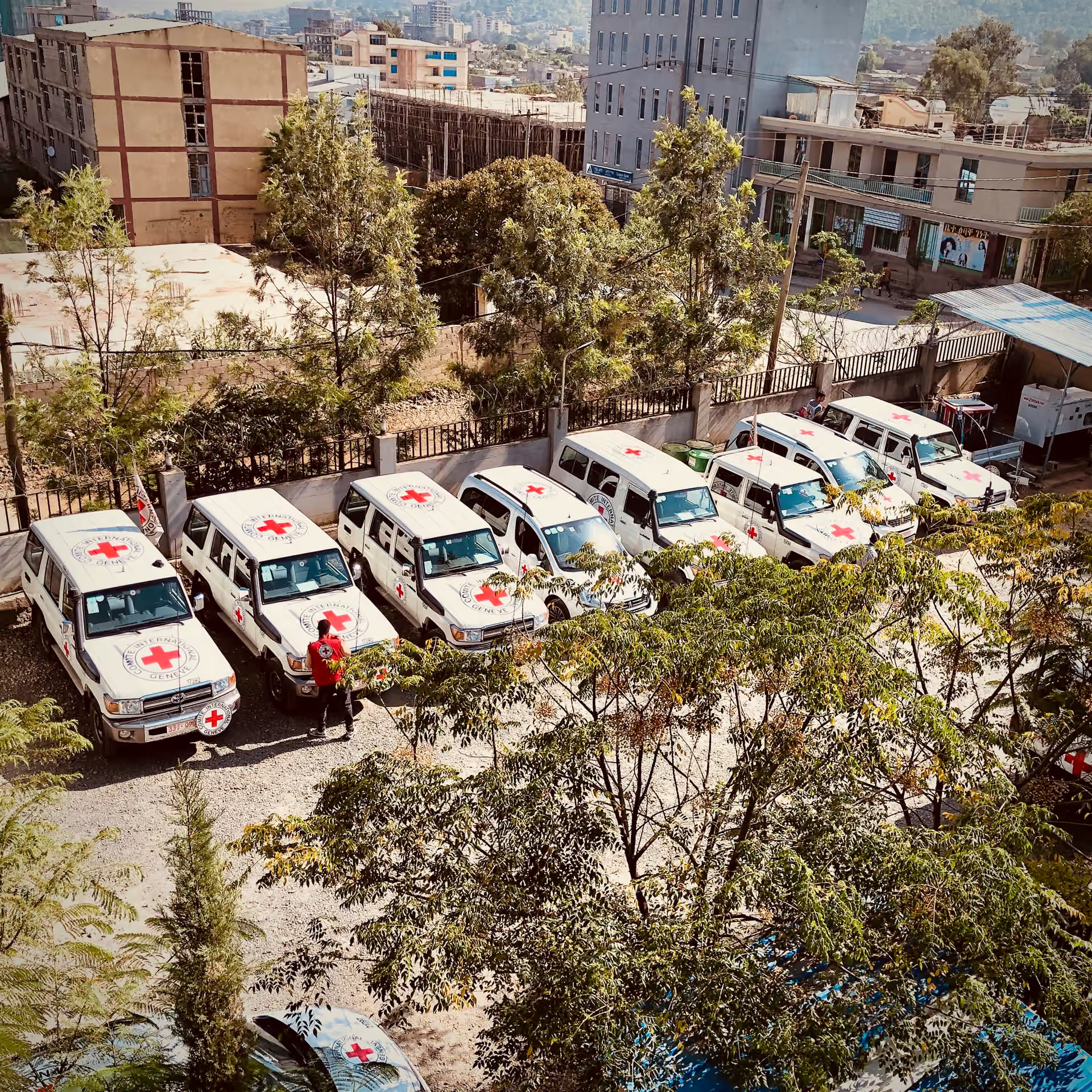
Image: © ICRC
New fleet and building which are helping the ICRC boost its efficiency in Tigray. Tigray Region, Mek’el.
Keeping a dialogue going
The Netherlands attaches enormous importance to international humanitarian law. ‘It’s the very foundation of international cooperation,’ says Pascalle Grotenhuis, Director-General for International Cooperation at the Dutch Ministry of Foreign Affairs. ‘That’s why the Netherlands works with like-minded UN member states to protect humanitarian aid workers and hold countries to their commitments under international humanitarian law.
The Netherlands uses its diplomatic channels to make contact with other states and remind them of those commitments– whether these are likeminded countries, or countries with which relations may be more strained. Grotenhuis: ‘It’s always a matter of weighing up how to get the best result: by talking behind-the-scenes or out in front of the cameras.'
An example of the Netherlands’ diplomatic efforts is the Netherlands response to the registration law that Israel imposed on humanitarian NGOs in Gaza, and advocated for unimpeded humanitarian access.’
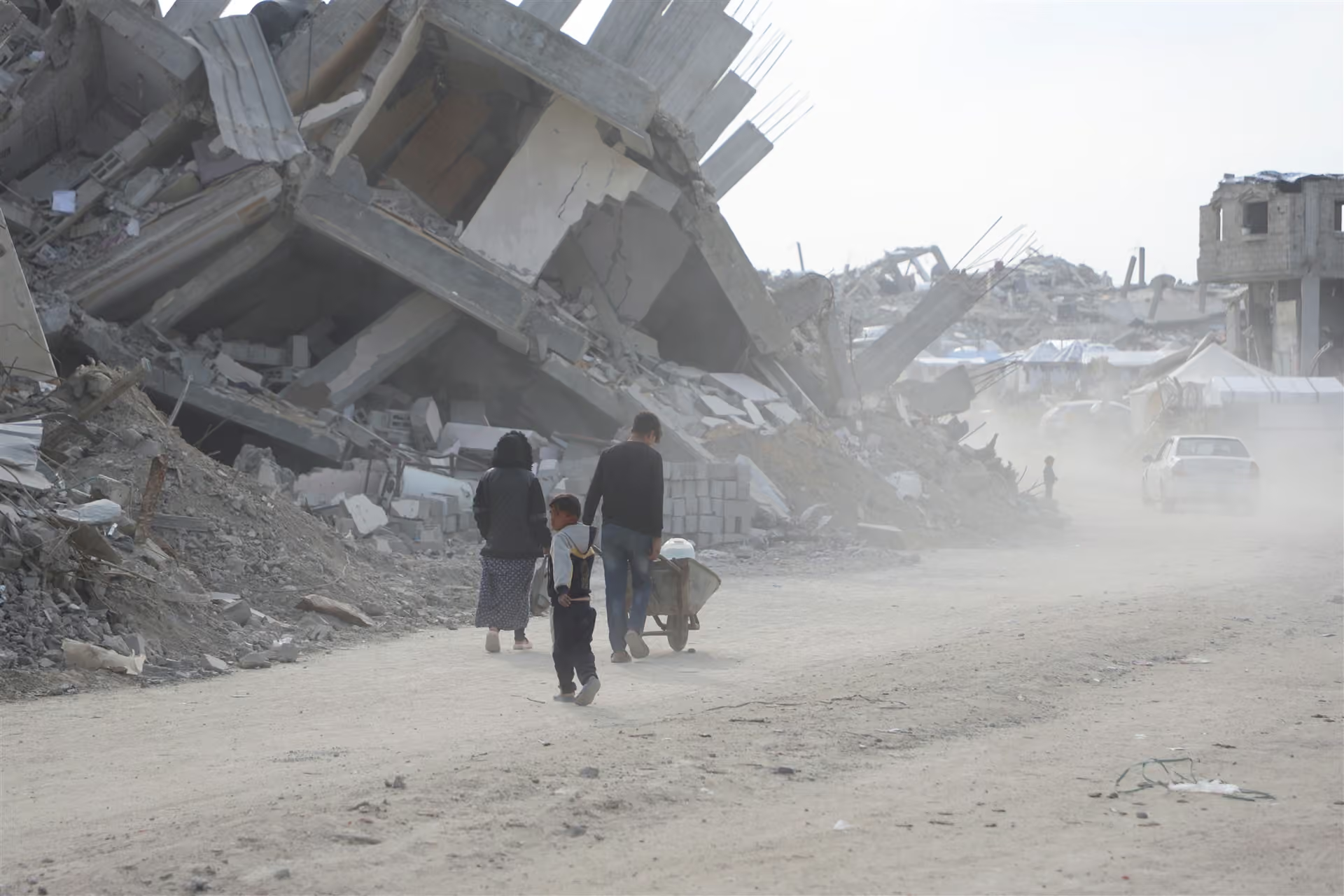
Image: © ICRC
A family walks amid the rubble, carrying drinking water distributed by the ICRC. Gaza Strip, Zaytoun neighbourhood.
Multiannual and unearmarked support
Another way in which the Netherlands supports the two organisations is through financial contributions. ‘We obtain a large portion of our budget from donors for specific objectives, such as tackling natural disasters, as was the case in Nepal,’ Goossens explains. ‘But the Dutch government gives us “unearmarked” funding. That means the Red Cross can decide for itself what we do with that money within the response to humanitarian needs. This allows us to act immediately in the event of a disaster, while remaining accountable for how the funds are used.’
Goossens believes that the multiannual nature of the Netherlands’ funding adds value too: ‘In order to consistently make an impact, it's essential to have multiannual funding. When an earthquake hits, the first three days are crucial. You can’t wait to receive approval before you launch the relief effort. But rebuilding the country afterwards often takes years.’
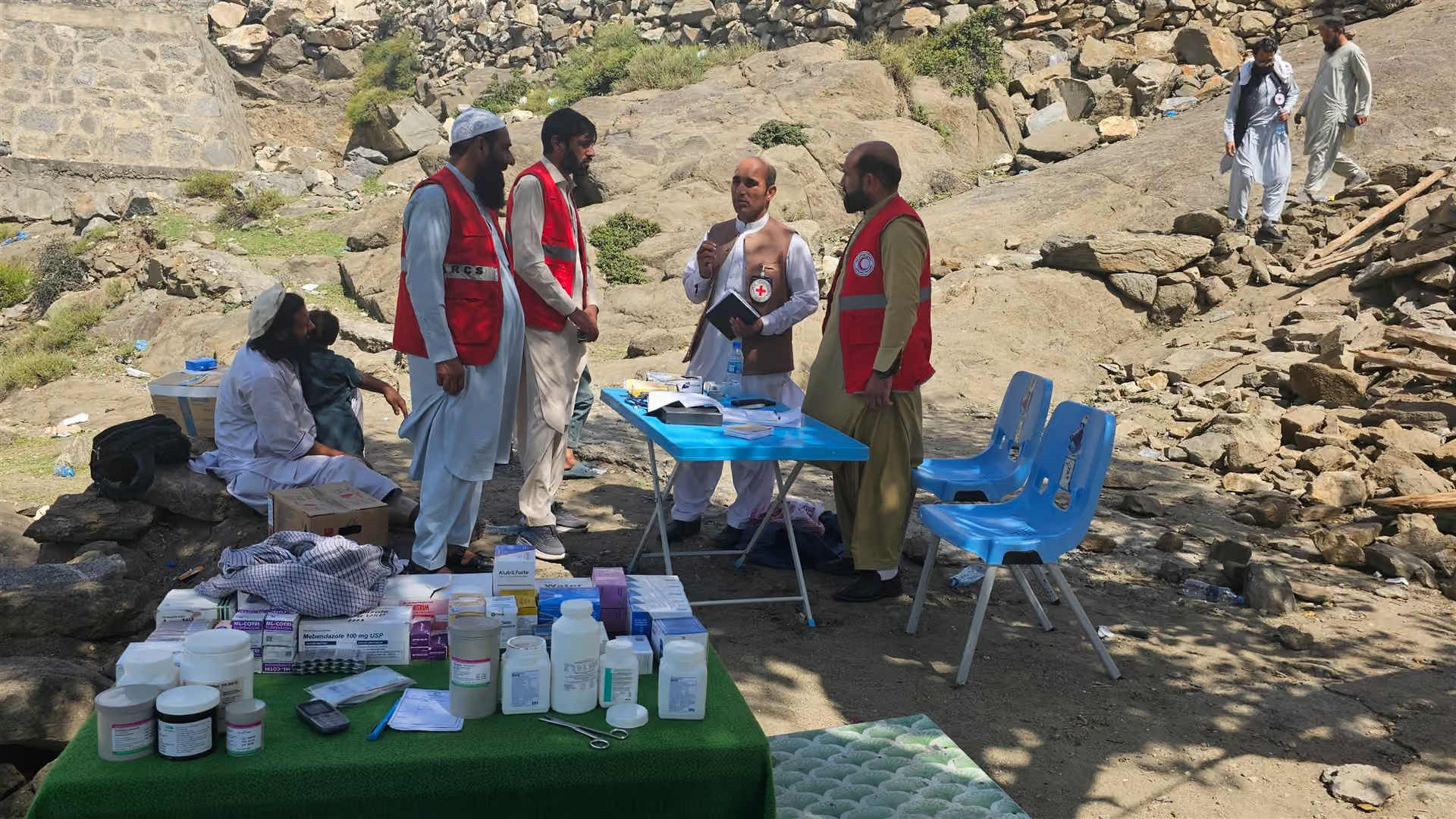
Image: © ICRC
Emergency relief efforts by the ICRC and the Afghan Red Crescent for communities devastated by the earthquakes in eastern Afghanistan. Mazar Dara, Kunar province, Afghanistan.
Next steps in protecting international humanitarian law
Two years ago the ICRC launched the Global Initiative on International Humanitarian Law, after observing a serious deterioration in respect for international humanitarian law. Krähenbühl: ‘And I have to say that, in my 30 years at the ICRC, I have never before seen so much political engagement in and support for this issue. There are now 150 countries taking part in the Global Initiative. And that’s because we all want the existing agreements to be known, respected, promoted and applied.’
The Netherlands is an active participant in the Initiative. Grotenhuis: ‘Protecting international humanitarian law is not something the Netherlands can do alone. We all have to do it together. Working with other countries and with specialised humanitarian partners. It’s a relationship that’s based on trust. We trust that our partners, including the Red Cross movement, use the funding they receive from the Netherlands effectively. They in turn trust that we will stand up for international humanitarian law and help us to stay focused on our commitments.’
In this way, international humanitarian law can continue making a real difference. Krähenbühl: ‘There have been countless cases in which my colleagues in the field have been able to gain access to prisoners of war, or help reunite a family separated by conflict. This isn’t abstract theory; it’s daily practice. International humanitarian law genuinely changes things for people in conflict situations. So there’s every reason to remain positive.’