
The Korean War ended with the signing of an armistice in 1953, but no official peace treaty has ever been concluded. Tensions between North and South Korea therefore remain palpable.
In this article, Peter van der Vliet, the Dutch ambassador in Seoul, discusses the situation in North and South Korea and the role played by the Netherlands.
Image: © Ministry of Foreign Affairs
Peter van der Vliet, Dutch ambassador in Seoul.
The Korean War
North Korea’s invasion of South Korea in 1950 touched off the Korean War. Fighting raged for three years, resulting in millions of deaths. North Korea was supported by Russia and China. South Korea received help from a mission led by the United Nations (UN), in which some 5,000 Dutch soldiers also took part. Of that number, 122 were killed and three went missing in action. The war ended with an armistice in 1953, but no official peace treaty has ever been signed.
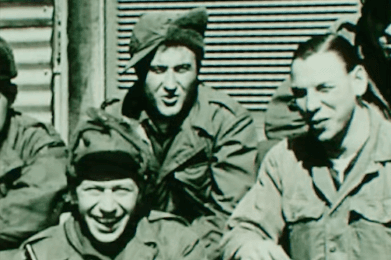
Archive footage of Project Soldier showing Dutch soldiers in Korea. 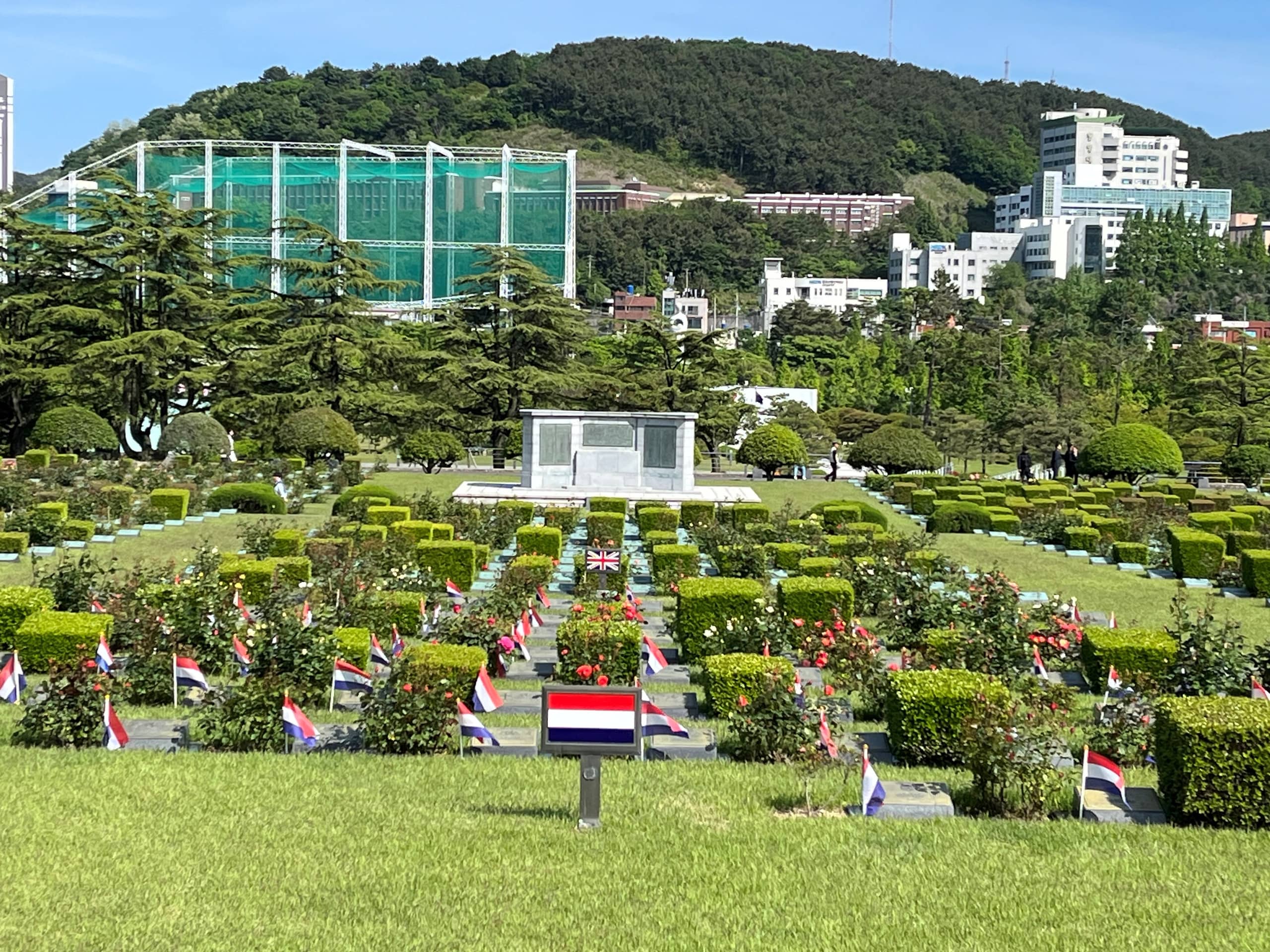
UN Memorial Cemetery in Korea (UNMCK).
Since then, North and South Korea have been separated by a demilitarised zone (DMZ): a strip of land approximately four kilometres wide along the armistice line where military activities are prohibited. ‘It’s effectively a frozen war. For more than 70 years, this zone has served as a buffer between the two countries,’ says Ambassador Van der Vliet. ‘It’s also an interesting case study for other conflicts, such as Russia’s war on Ukraine. For instance, what does a ceasefire entail and what security guarantees are needed?’
To this day, military personnel on both sides of the border stand ready to spring into action. Provocations have been a regular occurrence in recent years. ‘For example, North Korea has sent rubbish-filled balloons across the border, conducted missile tests and blasts noise and propaganda at South Korea with giant loudspeakers. South Korea has felt compelled to respond to all of this, leading to a dynamic of action and reaction.’
Smuggled USB sticks and CDs
Due to a lack of reliable information, little is known about daily life in North Korea. ‘The regime does everything it can to keep the country closed off,’ explains the ambassador. According to UN reports, the population faces severe repression and large-scale human rights violations.
The North Korean population is almost completely cut off from the outside world. For instance, there is virtually no access to the internet, and the government controls almost all information. ‘This means the population is unaware of what’s happening in the rest of the world and how rapidly things are changing there, as that could cause problems for the regime.’
Music, films and TV series from South Korea are also strictly forbidden. CDs and USB sticks are nevertheless smuggled across the border in the utmost secrecy, a North Korean refugee told the ambassador. ‘You can only watch films and series in secret, because if you get caught, there could be terrible consequences.’
‘South Koreans can go where they like, buy expensive clothes and have fun. But there’s also compulsory military service, and the country’s large and p
Rapid development
These films and series afford the North Korean population a glimpse of the modern lifestyle in their neighbouring country. ‘South Korea has undergone rapid development,’ says Ambassador Van der Vliet. ‘It’s now the world’s 12th-largest economy, with a major semiconductor sector and automotive industry and a leading position in advanced shipbuilding. South Korean culture and products like K-Pop and K-Beauty are also hugely popular worldwide.’
Although daily life in South Korea carries on as normal, the threat of conflict with North Korea hangs over the country like a constant cloud. ‘That sounds contradictory,’ concedes the ambassador. ‘South Koreans can go where they like, buy expensive clothes and have fun. But there’s also compulsory military service, and the country’s large and powerful army is always alert and ready.’
Cooperation with Russia
Despite North Korea’s ongoing military build-up, the ambassador does not believe that Pyongyang aspires to launch a war to take over South Korea. ‘That would most likely spell the end of the North Korean regime,’ he explains. A major concern, however, is that provocations might lead to an unintentional escalation. ‘That risks a dangerous game which neither side stands to benefit from, especially as North Korea has nuclear weapons.’
Another concern is the military cooperation between North Korea and Russia. ‘North Korea’s help is enabling Russia to prolong the war against Ukraine. For example it is supplying extra ammunition, missiles and even troops,’ the ambassador says. ‘We’re feeling the consequences directly in Europe: this affects Ukraine’s security, our own security and the stability of the international legal order.’
‘The world does not consist of isolated regions. What happens in Korea is felt here in Europe too.’
What is the Netherlands doing to prevent further escalation between North and South Korea?
An intensification of the conflict between North and South Korea would have global repercussions, like disrupting global trade and making shipping routes inaccessible. ‘The business community would feel the effects, but so would consumers, for example through disruptions to the supply chain for products such as food, smartphones and cars. The world does not consist of isolated regions. What happens in Korea is felt here in Europe too.’
The Netherlands is committed to maintaining stability on the Korean peninsula, and it supports South Korea in a variety of ways, for example:
- The United Nations Command: The United Nations Command (UNC) is the UN command that assisted South Korea during the Korean War and has been responsible for monitoring compliance with the armistice in and around the DMZ since 1953. ‘The Netherlands has participated in the UNC since its establishment in 1950 and continues to do so, currently through the secondment of a number of military personnel,’ says Ambassador Van der Vliet. ‘In this way, we’ve remained involved in the security of the peninsula. It also has symbolic value: it’s a way of demonstrating our solidarity with South Korea, as a partner and ally.’
- Monitoring of sanctions against North Korea: North Korea is one of the most heavily sanctioned countries in the world. UN sanctions apply to North Korean products, and North Korean banks are largely cut off from international payment systems. The Netherlands is a co-founder of the Multilateral Sanctions Monitoring Team (MSMT), an international body that investigates and reports on violations of UN sanctions against North Korea.
- Diplomatic pressure: Together with partners from the European Union and the UN, the Netherlands is committed to applying diplomatic pressure. For instance, the Netherlands endorses statements calling for lasting peace and speaks out against human rights violations.
Wide-ranging cooperation with South Korea
South Korea is one of the Netherlands’ key partners in the Indo-Pacific , and vice versa. As the ambassador notes: ‘Since 2022, the Netherlands and South Korea have had a strategic partnership and cooperated in the fields of trade, defence, politics and security. Earlier this year saw the first ‘2+2 meeting’ between the foreign ministers and trade ministers of the two countries. The agenda included economic security, cooperation in the semiconductor sector, AI and cybersecurity.’