
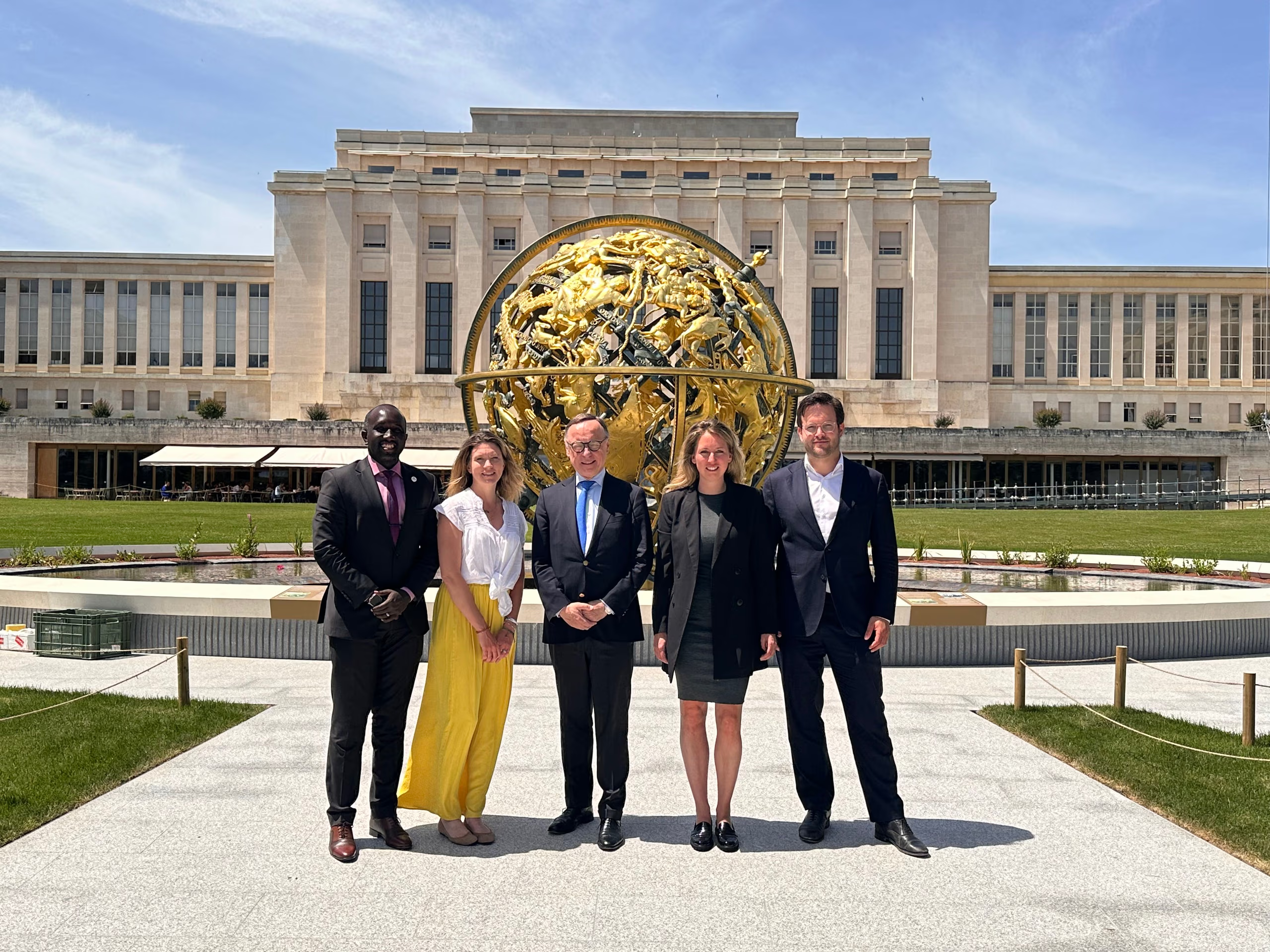
As artificial intelligence transforms the global balance of power, diplomacy is changing too. The Netherlands recently appointed its first Special Envoy on Artificial Intelligence (AI) to strengthen international cooperation on one of the defining technologies of our time. Harry Verweij about the opportunities, the risks and why, in his words, ‘science fiction is already here.’
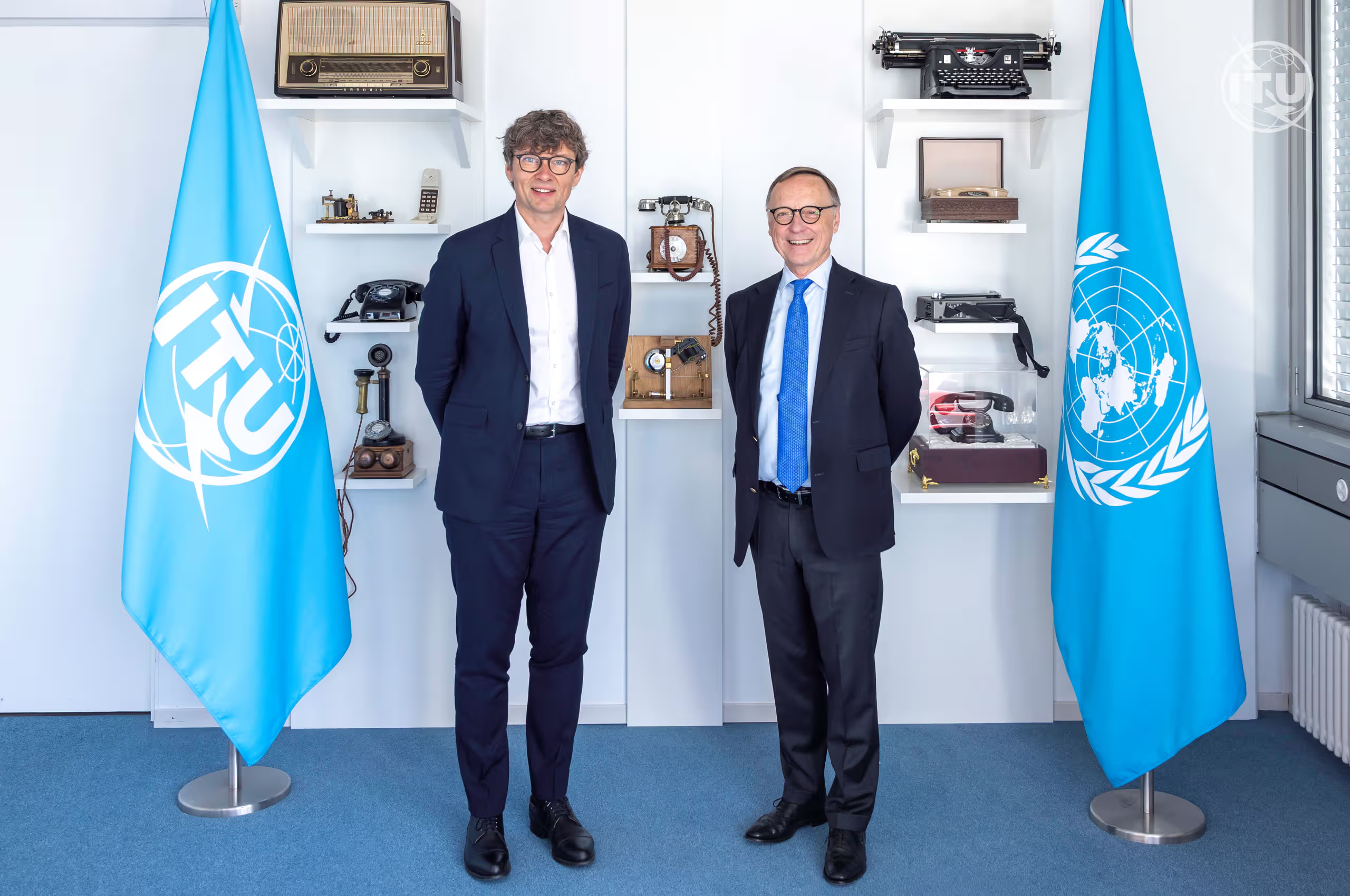
Why does AI need diplomacy?
‘AI is affecting almost everything. Our economies, our security and the way countries relate to one another. That is why international cooperation has become so important.
I work on implementing the Netherlands' International AI Strategy. How do we strengthen international cooperation? How do we reduce strategic dependencies? And how do we ensure AI is developed and used responsibly? Those are the questions I work on every day.’
What attracted you to this role?
‘It felt like a fascinating challenge. AI is evolving so quickly that, in many ways, we are all pioneers. That is what makes it so interesting.
I also see my own children using AI. It makes me wonder what this technology will mean for our societies in the years ahead. For me, this role is an opportunity to build on my diplomatic experience while learning something completely new.
At the same time, we should remain modest. No country can shape the future of AI on its own. We need to understand where we can make a real contribution. The Netherlands plays a key role in the AI global supply chain. We have also helped shape cyber diplomacy in the past decade with out international partners. So there are plenty of opportunities to work together, within Europe and with international partners that share similar values and interests.’
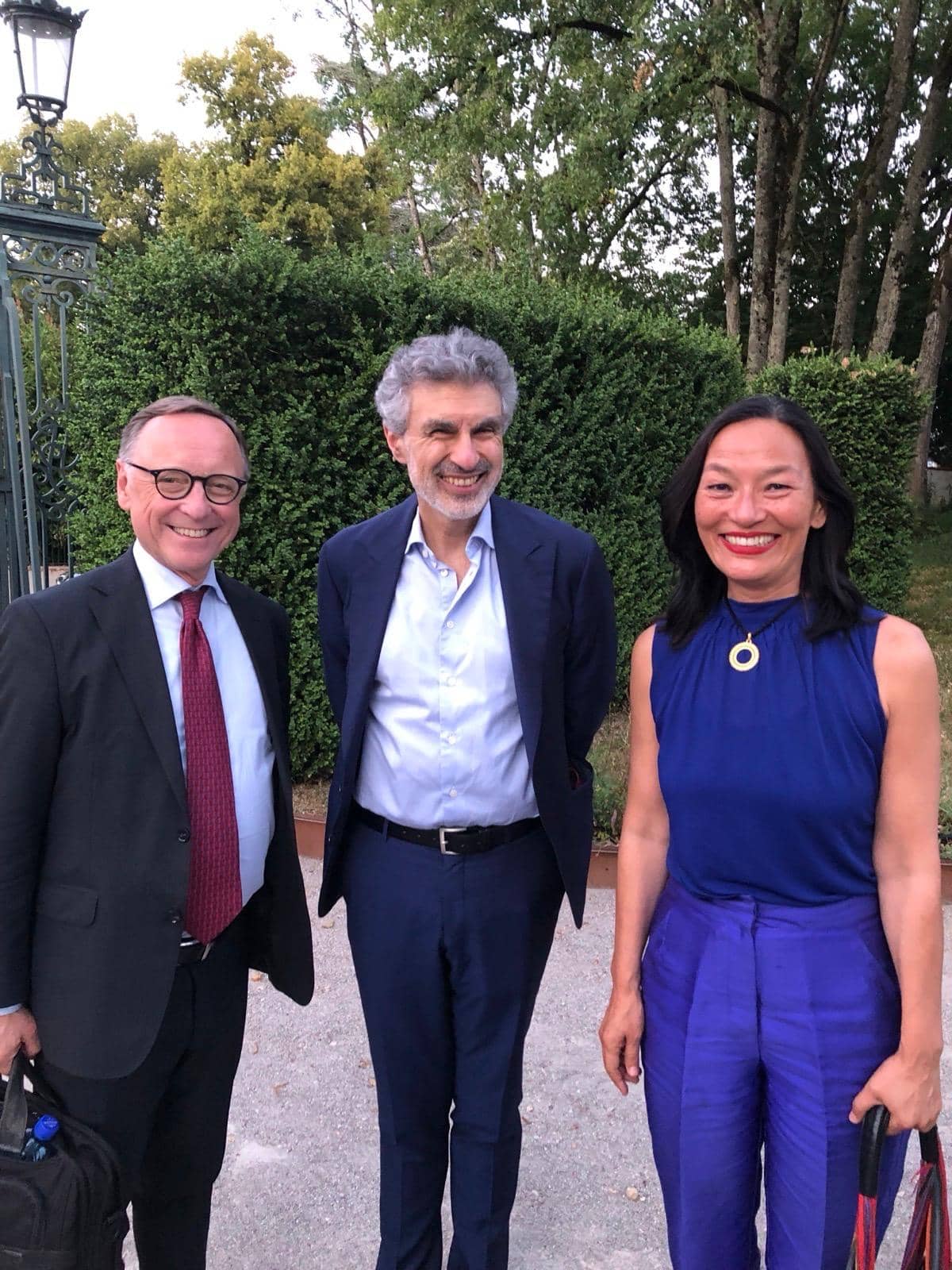
Harry Verweij with Yoshua Bengio, the founding father of AI as we know it today.
Many people think of AI as a technology issue. Why do you see it as a geopolitical one?
‘I think that is only part of the story. I try not to focus on the technology itself. I am much more interested in AI's geopolitical implications.
We are already seeing countries making strategic decisions about access to the most advanced AI models. At that point, AI is no longer just about technology. It becomes a question of power, strategic dependencies and security.
That also shows why this is no longer an abstract discussion. Things are happening today that would have seemed like science fiction only a few years ago. Science fiction is already here. The challenge now is to understand what that means for our societies and how we respond together.’
Is Europe falling behind the United States and China?
‘If you look at the scale of investment, that is a fair conclusion. The amounts invested by major technology companies are enormous. Europe is unlikely to match those investments.
But I also think we sometimes focus too much on scale. Europe needs to think and act more strategically. The Netherlands has world-leading expertise in semiconductors, centred around the Eindhoven region, and that is one example of where Europe can make a real contribution.
The world is built on mutual dependencies. Those dependencies create risks, but they also create opportunities to work together.’
Where do you see the biggest opportunities and risks?
‘I believe the opportunities outweigh the risks, provided we get the governance right.
AI has enormous potential for science, healthcare and economic growth. I am genuinely optimistic about what it can achieve.
At the same time, we cannot afford to be naïve. We are already seeing risks such as disinformation, identity fraud and the enormous amounts of personal data people share with AI systems. Never before have so few actors had so much influence over individuals, societies and countries. Meanwhile, we are seeing how AI is transforming modern warfare in Ukraine and Iran. As these systems become more autonomous, there is a rise in unpredictable behaviour that even the developers themselves cannot fully explain.
That is why international cooperation is so important. Ultimately, this is about protecting democratic values, human rights and our shared security.’
Looking ahead, what would success look like?
‘That is a difficult question because AI is evolving so quickly. We cannot predict today exactly what the world will look like tomorrow.
I would be pleased if the Netherlands is recognised as a constructive and reliable international partner on AI, with a role that reflects our strengths in innovation and technology. People often say the Netherlands 'punches above its weight'. I would like to see that apply to AI as well.
Above all, I hope we will not have been naïve. I hope we will have recognised the changes in time, found the right international partners and helped ensure AI strengthens our shared prosperity, security and democratic values.
For a diplomat, this is one of the most fascinating subjects of our time. I am looking forward to contribute.’